

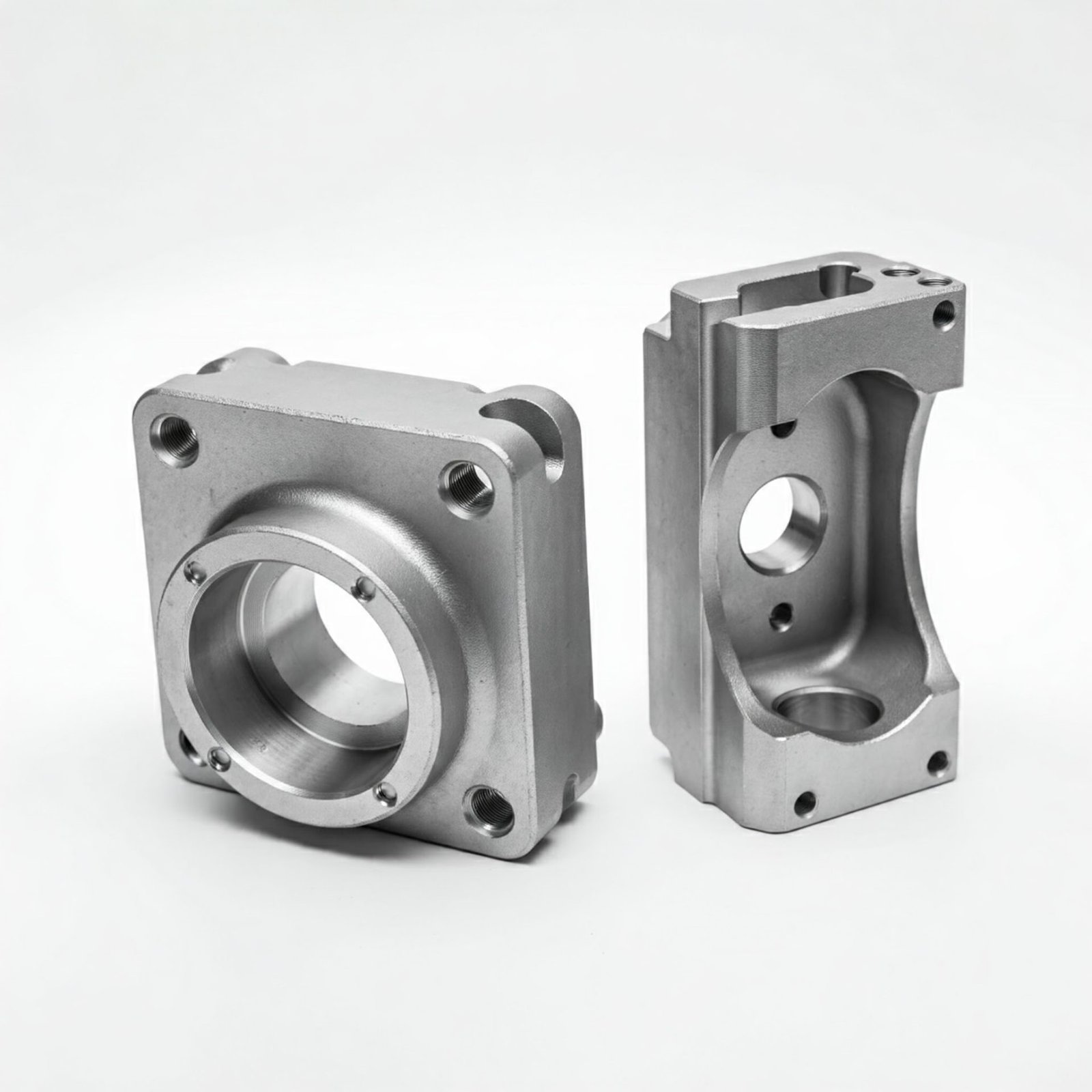
Durable and Precision-Engineered Cold Formed Aluminium Parts
Expertly crafted cold formed aluminium parts ensure optimal performance, precision, and reliability for industrial and commercial needs.
What Is Aluminium Cold Forming?
Aluminium cold forming is a manufacturing process in which wire, rod or a cut slug is shaped at or near room temperature using punches and precision dies. Instead of cutting away material, controlled pressure makes the aluminium flow into the required geometry. Common operations include cold heading, upsetting, forward and backward extrusion, coining and sizing. Because the process preserves material and follows the grain flow of the metal, it can produce strong, consistent components with smooth surfaces and very little scrap. Work hardening during forming may also improve the strength of the finished part. These advantages make cold forming attractive for repeat production and for components where reliability, material efficiency and a high strength-to-weight ratio are important.Cold Forming vs Cold Forging
The terms cold forming and cold forging are often used interchangeably, but cold forming is the broader description. Cold forging generally refers to reshaping a solid aluminium blank by compressive force in a die. Cold forming can include cold forging as well as heading, extrusion, coining, swaging and related operations used to create detailed features without heating the metal to forging temperature. Both processes can deliver excellent dimensional repeatability and stronger grain flow than conventional machining. The best route depends on the part geometry, alloy and temper, required tolerances, annual quantity and secondary operations. Our engineers review these factors during design-for-manufacture evaluation.Typical Cold Formed Aluminium Parts
Cold forming can produce simple or complex aluminium components, including:- Fastener components such as rivets, pins, collars, spacers, studs, screw and bolt blanks
- Electrical parts including compression lugs, terminals, connector bodies, sleeves, ferrules and contact components
- Automotive and industrial parts such as bushings, valve components, fittings, shafts, plugs and retainers
- Impact-extruded shells, housings, enclosures, caps, cans and heat-dissipation components
- Custom aerospace, renewable-energy, appliance, electronics and construction components
Part Sizes, Tolerances and Aluminium Alloys
Cold-headed and multi-station formed parts commonly range from approximately 2 mm to 50 mm in diameter, while impact-extruded components can be larger. Very small precision parts, stepped diameters, thin walls, recesses and near-net shapes are possible when the material and tooling are matched to the design. Final size limits and tolerances depend on the alloy, temper, forming ratio, length-to-diameter ratio, wall thickness and production equipment. Formable grades from the 1xxx, 3xxx, 5xxx and 6xxx aluminium series may be considered, subject to the required strength, conductivity, corrosion resistance and post-forming heat treatment. Softer tempers are often preferred for severe deformation. We can recommend an appropriate alloy and process sequence after reviewing the drawing and application.Industries Served
Cold formed aluminium components are used in automotive and electric vehicles, electrical power and switchgear, electronics and telecommunications, aerospace, industrial machinery, construction, renewable energy, appliances and consumer products. Their combination of low mass, corrosion resistance, conductivity and production efficiency makes them suitable for both structural and electrical applications.Secondary Operations, Finishes and Quality Control
Parts can be supplied with secondary operations such as thread rolling, trimming, drilling, tapping, precision machining, deburring, heat treatment and assembly. Available finishes can include anodizing, chemical conversion coating, polishing and other application-specific surface treatments. Quality planning may include incoming material verification, dimensional inspection, visual inspection, hardness testing, gauges and documented traceability as required by the customer. Tooling and inspection methods are selected to maintain consistency across production batches.Custom Cold Formed Aluminium Components
For a technical review and quotation, send a 2D or 3D drawing with the aluminium grade and temper, critical dimensions and tolerances, surface finish, annual quantity and operating requirements. Conex can evaluate tooling, forming stages and secondary operations to develop a reliable and cost-effective manufacturing route.Cold formed parts are produced by shaping aluminium wire, rod or slugs at room temperature in cold headers, multi-station formers or impact-extrusion presses. The process creates precise, strong parts at high speed with almost no material waste.
Rivets, screws, bolts, pins, bushings, spacers, shells, cans, electrical contacts and special-shaped fasteners are commonly cold formed.
1050 and 1100 (very ductile), 5052 and 5056 (rivets and fasteners), 6061 and 2024 (higher strength after heat treatment) are commonly cold formed.
Cold forming offers high productivity, 80–95% material utilisation, work-hardened strength, continuous grain flow and excellent surface finish, reducing cost at high volumes.
Cold formed features are typically held within about ±0.05 mm on diameters, with closer tolerances achievable by secondary operations.
Yes. Heat-treatable alloys like 6061 and 2024 can be solution treated and aged after forming to increase strength.
Thread rolling, drilling, tapping, grooving, machining and finishing can be added to cold formed blanks.
Anodizing, chromate conversion, plating and dry-film lubricants are available.
Cold forming is best suited to high volumes, typically tens of thousands of pieces and above, because tooling is specialised.
Dimensional checks at start-up and during runs, visual checks for cracks or laps, and mechanical testing for strength.
Yes. We develop tooling for custom shapes from drawings or samples.
Yes. The unbroken grain flow and work hardening typically give higher strength and fatigue resistance than parts machined from bar.
Parts are counted or weighed and packed in bags and cartons for export.
Tooling takes about 3–5 weeks and production 4–6 weeks after sample approval.
Please share the drawing, alloy, finish and annual quantity.
Need Cold Formed Aluminium Parts? Get a Fast, Detailed Quotation
Send your drawing (STEP, IGES, DWG, DXF or PDF) with material grade, finish and quantity. Our engineers reply with a DFM review, price and lead time. MOQ 10 pcs • ISO 9001:2015 • Exports to USA, UK, Europe, Canada & Australia.


