About Conex

Welcome to Conex Aluminium Components, a leading manufacturer and exporter of high-quality, precision-engineered non-ferrous metal components worldwide.

Contact Info

  • Plot 1, Street No 1, Road No 1
  • sales@conexaluminium.com
  • Sat - Thu: 09.00 to 18.00

Aluminium Pressed Components

Conex > Products Range > Aluminium Pressed Components

Precision Aluminium Pressed Components for High-Performance Applications

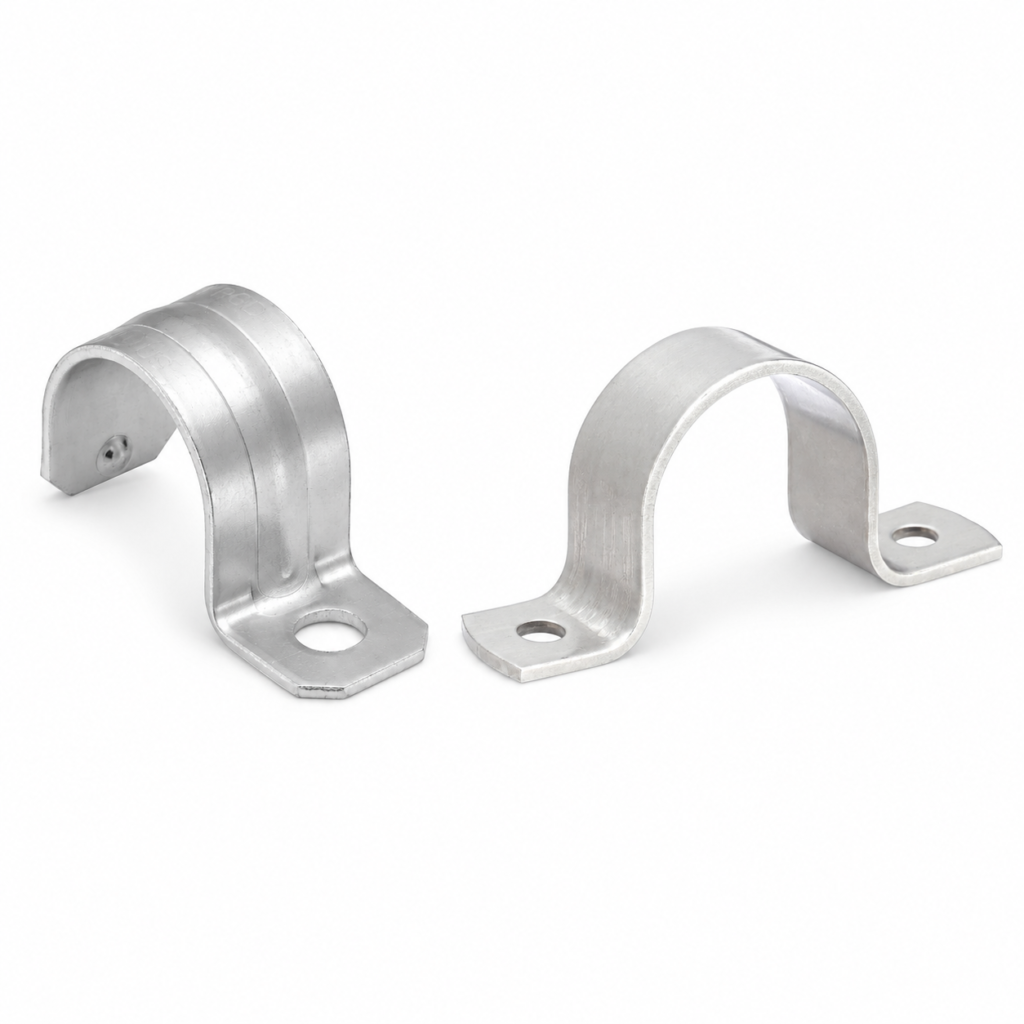
Conex manufactures custom aluminium pressed components for OEM, electrical, solar, construction and equipment applications. We combine controlled blanking, punching, bending, deep drawing and secondary machining to supply lightweight parts with repeatable dimensions, clean edges and dependable corrosion resistance.

Prototype-to-production support: our engineers review alloy, temper, grain direction, bend radii, tolerances, tooling and finish so each pressed aluminium part is practical to manufacture and consistent in assembly.

Custom aluminium pressing and sheet-metal capability

We manufacture brackets, mounting plates, enclosure parts, clips, covers, shields, terminals and formed assemblies from customer drawings or samples. The production route is selected around geometry and volume: simple parts may use single-operation tools, while repeat programmes can use compound or progressive tooling for faster, more consistent output.

Materials, processes and finishing

Common aluminium sheet grades are selected according to formability, strength, conductivity, surface finish and service environment. Operations can include laser cutting, blanking, piercing, bending, drawing, riveting, welding, tapping, deburring and CNC finishing. Anodizing, powder coating, polishing and other finishes can be coordinated to the drawing specification.

Design-for-manufacture and quality control

Early DFM review helps avoid cracking, distortion, excessive burrs and unnecessary tooling cost. We check bend allowance, hole-to-edge distance, bend relief, datum strategy and inspection access before production. Dimensional checks, visual inspection and agreed gauges or reports are applied according to part risk and customer requirements.

For an accurate quotation, send the drawing, alloy and temper, thickness, finish, annual quantity, delivery location and any critical-to-function dimensions.

Machining Equipment

Laser Cutting Machine, CNC Shearing Machine, Flat Bed Spot-welder, Die Grinder, Steel Processing Machine, Double Servo Turret-type Punch Press, Banding Machine, etc.

Materials

Carbon steel, Mild steel, Cold roll steel, Hot roll steel, Zinc plate, Stainless steel, Aluminium, SECC, SGCC, SPCC, SPHC, and other metals. Please contact us if your required material is not listed above.

Gauge Size

0.2mm up to 6 mm

Processing

Deep drawing, punching, bending, welding, riveting, grinding, machining, threading, etc.

Surface Treatment

Powder coating, blacking, polishing, anodizing, sandblasting, chrome plating, zinc plating, nickel plating, tinting, etc.

Service

OEM, ODM, Customized Design

File Formats

SolidWorks, Pro/Engineer, AutoCAD (DXF, DWG), PDF, TIF, etc.

Frequently asked questions about aluminium pressed components

The answers below cover common engineering, tooling, tolerance, finishing and quotation questions. Final material, geometry and process decisions are confirmed against your drawing, required performance and production quantity.

1050 and 1100 are used for deep drawing and electrical parts, 3003 for general forming, 5052 and 5754 for strong, corrosion-resistant brackets and enclosures, and 6061-T4/T6 where higher strength is needed after forming.

We press aluminium from about 0.5 mm to 8 mm thick, depending on part size, shape and press tonnage. Thicker parts are usually laser cut and bent instead.

Blanked and pierced features are typically held to ±0.05–0.1 mm, and bent features to ±0.2–0.5 mm with ±1° on bend angles, depending on thickness and geometry.

5052-H32 can usually be bent to an inside radius of about 1× thickness, while 6061-T6 needs 2–3× thickness to avoid cracking. Bending across the rolling direction improves results.

Progressive tools perform several operations as the strip advances, giving low piece prices for high volumes. Single-stage or compound tools are lower in cost and suit smaller volumes or large parts.

Tooling paid for by the customer remains the customer's property and is maintained by us for production of their parts.

Tapping, countersinking, clinch-nut insertion, riveting, welding, deburring, tumbling, anodizing, powder coating and assembly can be carried out in-house.

Burr height is controlled by tool clearance and maintenance and removed by tumbling or vibratory finishing where needed. Burr direction can be specified on the drawing.

Natural, anodized, chromate conversion, powder coated and painted finishes are available.

Yes. Converting suitable machined parts to pressed parts can reduce cost dramatically at medium and high volumes, while maintaining function.

First-article inspection, in-process checks with gauges and final inspection of dimensions, flatness and burrs are performed.

Pressing is economical from a few thousand parts upward, while laser cutting and bending suit lower volumes.

Tooling usually takes 3–5 weeks; samples follow tooling and production takes 3–5 weeks after approval.

Please send the drawing or 3D model, material and thickness, finish, annual quantity and any secondary operations required.

Need Aluminium Pressed Components? Get a Fast, Detailed Quotation

Send your drawing (STEP, IGES, DWG, DXF or PDF) with material grade, finish and quantity. Our engineers reply with a DFM review, price and lead time. MOQ 10 pcs • ISO 9001:2015 • Exports to USA, UK, Europe, Canada & Australia.