

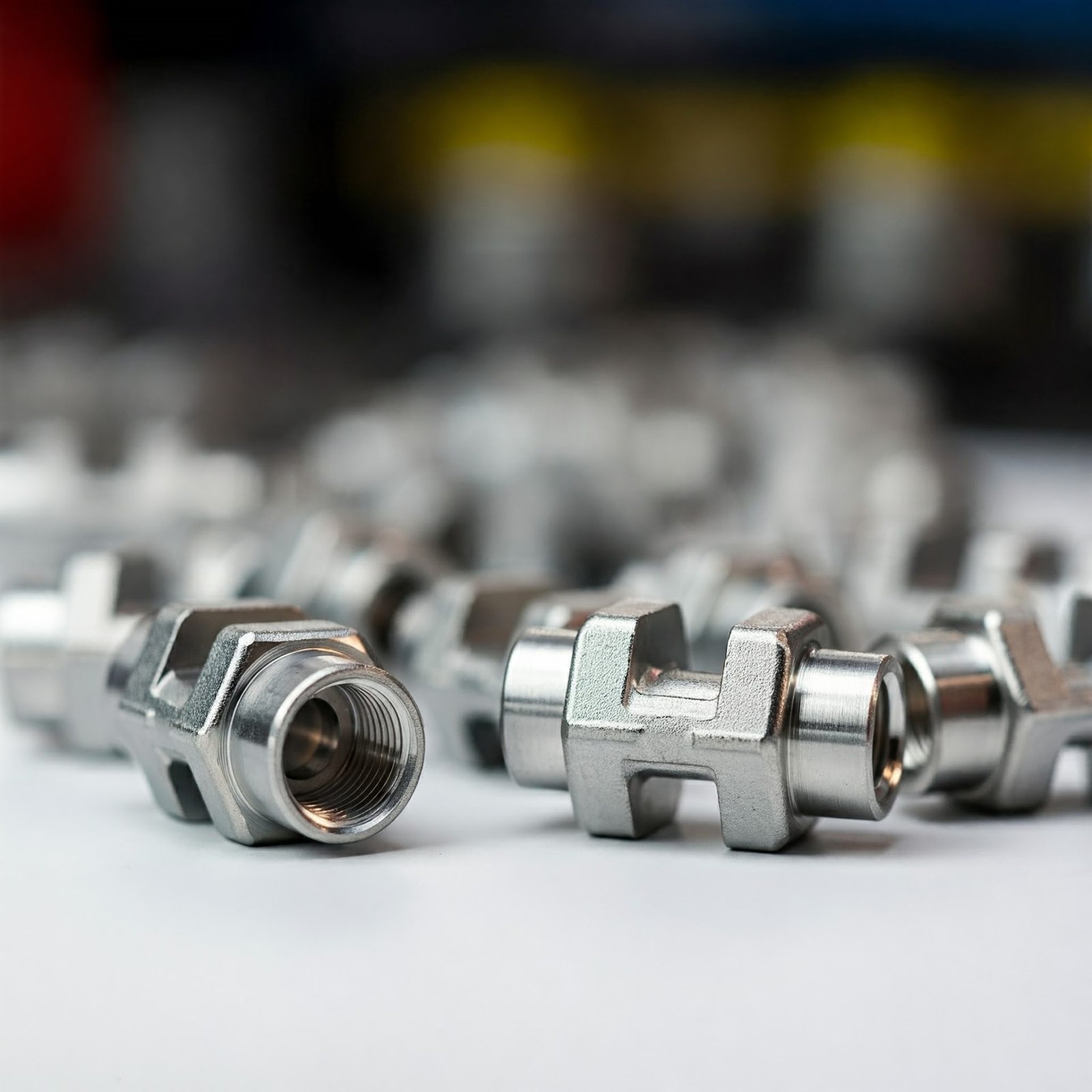
Durable Aluminium Line Taps Split Bolt Connectors
Our aluminium H tap connectors are crafted to provide reliable electrical conductivity, ensuring superior performance and durability for various industrial and power applications.
Precision-crafted aluminium H tap connectors, delivering dependable performance, corrosion resistance, and durability in electrical and power systems.
At Conex Aluminium Components, we specialize in manufacturing high-quality aluminium H tap connectors. These connectors are designed for power distribution systems and electrical installations, providing secure and efficient connections. Made from corrosion-resistant aluminium, they offer excellent conductivity and long-lasting performance. Our H tap connectors are easy to install and are available in various sizes to meet specific requirements. With a focus on precision and reliability, these connectors ensure consistent performance in both standard and custom applications.
Aluminium H-tap connectors create permanent compression taps or parallel joints between compatible aluminium conductors in distribution and grounding applications. Their H-shaped body provides separate grooves for the main and tap conductors. The connector must match both conductor materials, constructions, size ranges, current duty and the approved compression-tool system.
Compatibility depends on conductor metal, strand construction, cross-sectional area and outside diameter. AAC, AAAC, ACSR or other conductor families may require different connector designs and die charts. Copper or dissimilar-metal combinations require a connector specifically approved for that transition. Always provide data for both the main and tap conductors.
Selection uses the actual main and tap conductor ranges shown in the approved connector chart. Both conductors must sit correctly in their grooves and remain within the qualified range after compression. Nominal cross-section alone may be insufficient because compacted or reinforced conductors can have different diameters and hardness.
The correct die produces the intended compressed geometry, contact pressure and mechanical retention. A wrong die can under-compress, crack the connector, damage strands or create high resistance. Use the approved tool, die index, orientation, number of compressions and sequence. Tool calibration and clean die surfaces support consistent results.
Follow the connector manufacturer’s installation chart. The sequence typically controls metal flow and prevents conductor displacement, but exact start point, overlap and number of bites vary by design. Conductors must remain fully seated and aligned. Do not invent a sequence from a similar connector, because qualified performance depends on the specified method.
Use the approved utility procedure. Remove contamination and non-conductive oxide from the intended contact area without damaging strands, then apply the specified oxide-inhibiting compound if the connector is not pre-filled. Prepared surfaces should remain clean and be assembled promptly. Verify full conductor insertion and groove placement before compression.
Approved compound excludes moisture, limits renewed oxidation and supports long-term interface stability. Many connectors are factory pre-filled. Use only compatible material and avoid removing or contaminating the compound. Storage caps, seals and packaging should remain intact until installation so the joint surfaces are protected.
Qualification may include initial resistance, temperature-rise, current-cycle, mechanical pull and short-circuit tests according to the applicable standard. Stable performance relies on correct conductor matching, preparation and compression. Field inspection of die marks, compression count and alignment complements laboratory testing but does not replace the approved installation system.
Yes, when the exact main-and-tap combination falls within the connector’s approved range. Each groove can be designed for a different diameter range. Large mismatches or unlisted conductor constructions require a different part or custom design. Both conductor specifications should be supplied before selection.
They can be used outdoors when qualified for the conductor system and environment. Moisture, salt and pollution require effective oxide compound, compatible materials and appropriate insulation or protective covering where specified. The completed joint must also meet electrical-clearance, sealing and mechanical-support requirements for its voltage class and location.
No. Compression permanently deforms the connector and it should not be reused. Removing a joint may also damage conductor strands or reduce remaining length. Install a new approved connector with freshly prepared conductors and inspect any retained conductor section before making the replacement connection.
Common causes include wrong connector range, incorrect die, incomplete compression, dirty or oxidised strands, omitted compound, conductor misalignment, damaged strands and unapproved aluminium-to-copper contact. These defects increase interface resistance. Controlled tooling, trained installation and documented visual checks help prevent hot joints.
Manufacturing inspection can verify material, groove dimensions, surface condition, compound fill, markings and packaging. Installed joints are checked for correct conductors, die index, number and location of compressions, alignment, cracks and strand damage. Qualification may include pull, resistance, thermal-cycle and current tests.
Yes. Customisation can address conductor combinations, groove ranges, body length, die system, compound, markings and packaging. Conex requires conductor standards and diameters, current and fault duty, installation tool and die constraints, environment, applicable specification, validation tests and production quantity before confirming a design.
Provide main and tap conductor materials, standards, constructions, cross-sections and actual diameters; connection function; continuous and fault current; voltage class; approved crimping tool and die system; environment; compound, insulation and marking requirements; qualification tests, certificates, packaging and quantity.
Need Aluminium H Tap ConnectorsAluminium H Tap Connectors? Get a Fast, Detailed Quotation
Send your drawing (STEP, IGES, DWG, DXF or PDF) with material grade, finish and quantity. Our engineers reply with a DFM review, price and lead time. MOQ 10 pcs • ISO 9001:2015 • Exports to USA, UK, Europe, Canada & Australia.


