

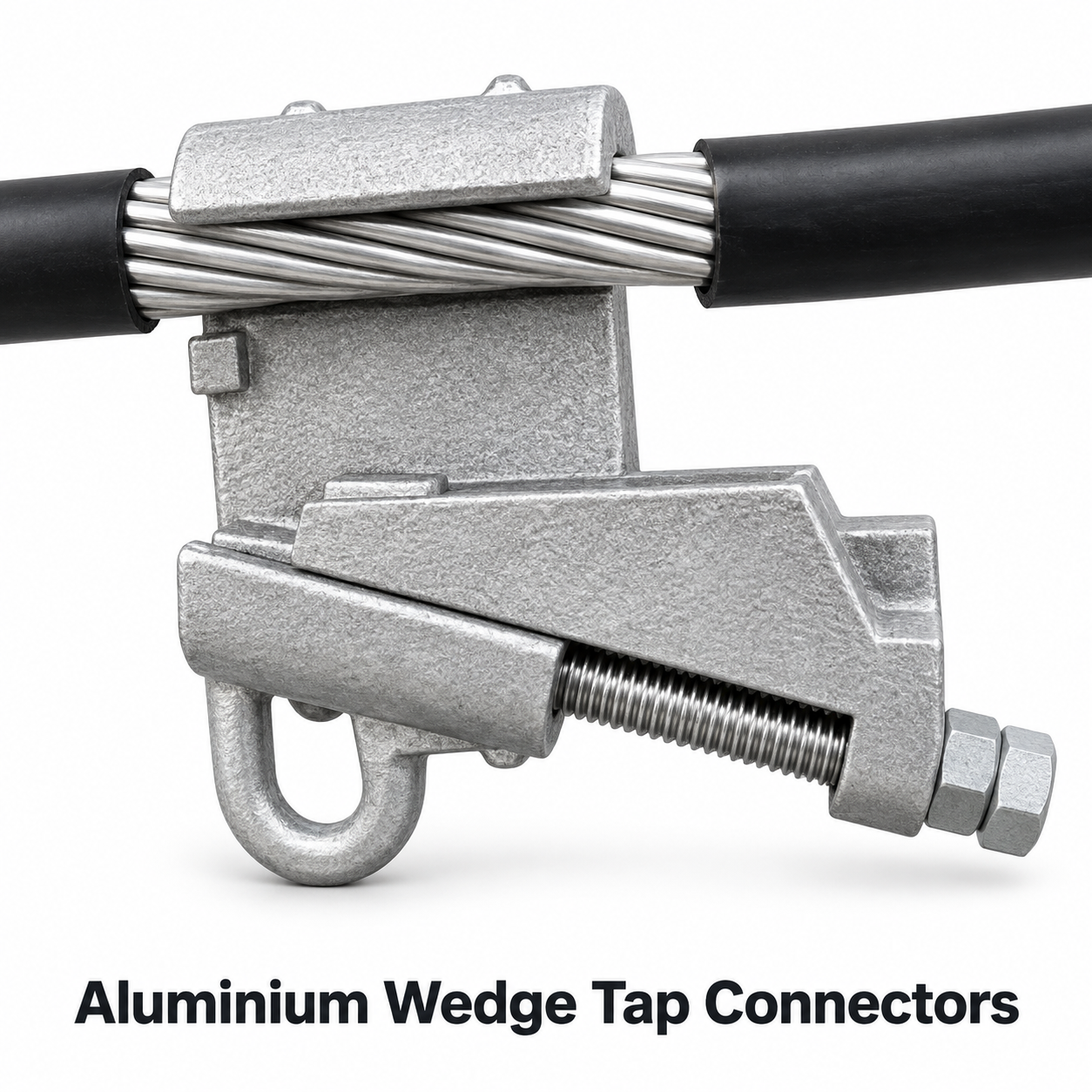
Durable and Precision-Engineered Aluminium Wedge Tap Connectors
Our Aluminium Wedge Tap Connectors are designed for secure and efficient electrical connections, offering excellent durability, conductivity, and corrosion resistance.
High-quality Aluminium Wedge Tap Connectors crafted for reliable and secure electrical connections in industrial, utility, and power distribution systems.
At Conex Aluminium Components, we manufacture Aluminium Wedge Tap Connectors for dependable main-to-tap connections in overhead distribution systems. Each connector is engineered as a complete contact system: conductor geometry, aluminium alloy, contact pressure, hardware, surface treatment and installation method are reviewed together. Multiple sizes and configurations can be produced to customer drawings and project-specific requirements.
Technical Design and Selection Details
A wedge tap connection develops controlled pressure between the main conductor, tap conductor and profiled connector surfaces. Correct groove geometry distributes contact load across the strands, limits local strand damage and helps maintain a stable conductive interface during load cycling, vibration and seasonal temperature changes.
Data Required for Correct Connector Selection
- Conductor details: main and tap conductor material, construction, nominal cross-sectional area, overall diameter and applicable dimensional tolerance.
- Conductor type: identify AAC, AAAC, ACSR or another conductor construction. Compatibility must be confirmed for the exact conductor combination; product family names alone are not sufficient.
- Electrical duty: system voltage, normal operating current, expected emergency loading, fault-current magnitude and duration, and allowable temperature rise.
- Mechanical duty: tension or non-tension application, required slip or pull-out performance, span geometry and exposure to aeolian vibration or conductor movement.
- Service environment: minimum and maximum ambient temperature, coastal or industrial pollution, moisture, salt spray, UV exposure and any special corrosion-protection requirement.
Electrical and Mechanical Performance
- Low-resistance current path: conductive cross-section, clean interfaces and sustained contact pressure are designed to minimise joint resistance and local heating.
- Thermal-cycle stability: the body, wedge and fastening system must accommodate differential expansion while maintaining contact pressure through repeated heating and cooling cycles.
- Mechanical security: conductor seating, wedge engagement and hardware retention are evaluated to resist slip, loosening and damage under the specified service load.
- Conductor protection: profiled contact surfaces should support the conductor without sharp edges, excessive strand indentation or stress concentration.
Materials and Corrosion Control
Connector bodies are manufactured from an aluminium alloy selected for electrical conductivity, mechanical strength, castability or machinability and outdoor durability. Hardware material and finish are chosen for the complete assembly. Where required, an approved oxide-inhibiting compound, compatible plating or a transition interface can be specified. Aluminium-to-copper applications require particular attention to galvanic compatibility, moisture exclusion and the approved system design.
Installation Controls
- Verify the connector marking, conductor range and main/tap orientation before installation.
- Clean and prepare conductors using the approved utility procedure; apply joint compound only when specified.
- Seat conductors fully and use the specified tool, die, wedge-driving method or tightening sequence for the connector design.
- For bolted versions, use the approved torque value and calibrated tooling; do not substitute a generic torque.
- Inspect final wedge position, conductor seating, hardware engagement and visible strand condition.
- Live-line installation is permitted only for a specifically approved connector and authorised utility work method performed by trained personnel.
Inspection, Testing and Documentation
Available quality controls can include alloy or material verification, dimensional inspection of grooves and functional datums, thread and gauge checks, coating verification, visual examination and traceability records. When specified by the purchaser, qualification or type testing may include contact-resistance measurement, temperature-rise and thermal-cycle testing, mechanical slip or pull-out testing, short-circuit performance and environmental or corrosion evaluation. The applicable edition and acceptance criteria of standards such as ANSI C119.4, IEC 61284, or a customer/utility specification should be agreed before manufacture.
Information to Include in an RFQ
Provide the main and tap conductor designations and diameters, system and fault-duty data, installation method, dimensional drawing or 3D model, material and finish requirements, applicable standard, inspection plan, marking, packaging, order quantity and annual demand. Final conductor range, installation torque, current rating and mechanical capacity should always be taken from the approved Conex drawing or project datasheet for the exact connector.yes
Aluminium Wedge Tap Connectors are used overhead distribution networks to create secure main-to-tap conductor connections with a wedge-style contact system. The exact design should match the conductor system, electrical duty, mechanical loading and installation practice defined by the project or utility.
Selection should consider conductor material, main and tap conductor size, operating current, mechanical duty, installation tooling and environmental exposure. The approved drawing and applicable project or utility specification should control the final choice rather than product name alone.
Aluminium combines useful electrical conductivity with low weight and good corrosion resistance. A correctly selected alloy also supports casting or machining of stable contact and mounting features, but interfaces, surface preparation and hardware must be designed for the complete connection system.
Compatibility depends on the connector range, conductor construction, alloy, plating or inhibitor system and the approved application. Conductor size, stranding and material should be stated on the enquiry so Conex can confirm the bore, groove, jaw or contact geometry.
Yes. Conex manufactures aluminium wedge tap connectors to customer drawings and application requirements. Dimensions, interfaces, material, finish, identification, inspection and packaging can be tailored after an engineering review, subject to process capability and order quantity.
Low resistance depends on adequate conductive cross-section, clean mating surfaces, controlled contact pressure and protection against oxide growth. Geometry, alloy, hardware and the specified installation method are reviewed together because connection performance cannot be determined by aluminium grade alone.
Material combinations, coatings, joint compound where specified, drainage and environmental sealing all influence galvanic performance. Copper-to-aluminium interfaces may require a compatible transition design; final protection should follow the equipment maker, utility and site requirements.
Installation instructions should identify conductor preparation, insertion or seating, tool and die where applicable, bolt or screw sequence, tightening torque and inspection criteria. Only trained personnel should install electrical connectors, and hot-line work must follow the authorised utility safety procedure.
Outdoor suitability depends on alloy, finish, hardware, joint protection, pollution level, moisture exposure and the enclosure or line configuration. Conex can review coastal, industrial, high-temperature or other demanding conditions when these are identified before manufacture.
Critical conductor interfaces, mounting holes, contact faces and assembly datums can be controlled to drawing requirements. Practical tolerances depend on part size, manufacturing process and inspection method; applying tight limits only to functional features improves consistency and cost.
Inspection can include material verification, dimensional checks, thread and hole gauges, visual examination and coating verification. Electrical, temperature-rise, mechanical or environmental tests should be defined by the applicable standard or customer qualification plan and agreed before production.
For an accurate quotation, provide a controlled drawing or 3D model, material or alloy requirement, critical dimensions and tolerances, finish, order quantity, annual demand, application and any inspection or documentation needs. Conex reviews manufacturability before confirming tooling, process route, lead time and commercial terms.
The spring-tempered C-shaped body and wedge are driven together with a powder-actuated or mechanical tool, creating high, constant contact pressure between the run and tap conductors that compensates for thermal cycling and creep.
Yes. They are installed with powder-actuated tools or hydraulic/mechanical wedge tools specified by the connector design. Correct tool and cartridge selection ensures full wedge engagement.
Yes, when tin-plated and filled with inhibitor compound, wedge tap connectors can join aluminium and copper conductors. The copper conductor should be positioned below the aluminium where possible to prevent copper-salt run-off onto the aluminium.
Need Aluminium Wedge Tap Connectors? Get a Fast, Detailed Quotation
Send your drawing (STEP, IGES, DWG, DXF or PDF) with material grade, finish and quantity. Our engineers reply with a DFM review, price and lead time. MOQ 10 pcs • ISO 9001:2015 • Exports to USA, UK, Europe, Canada & Australia.


