

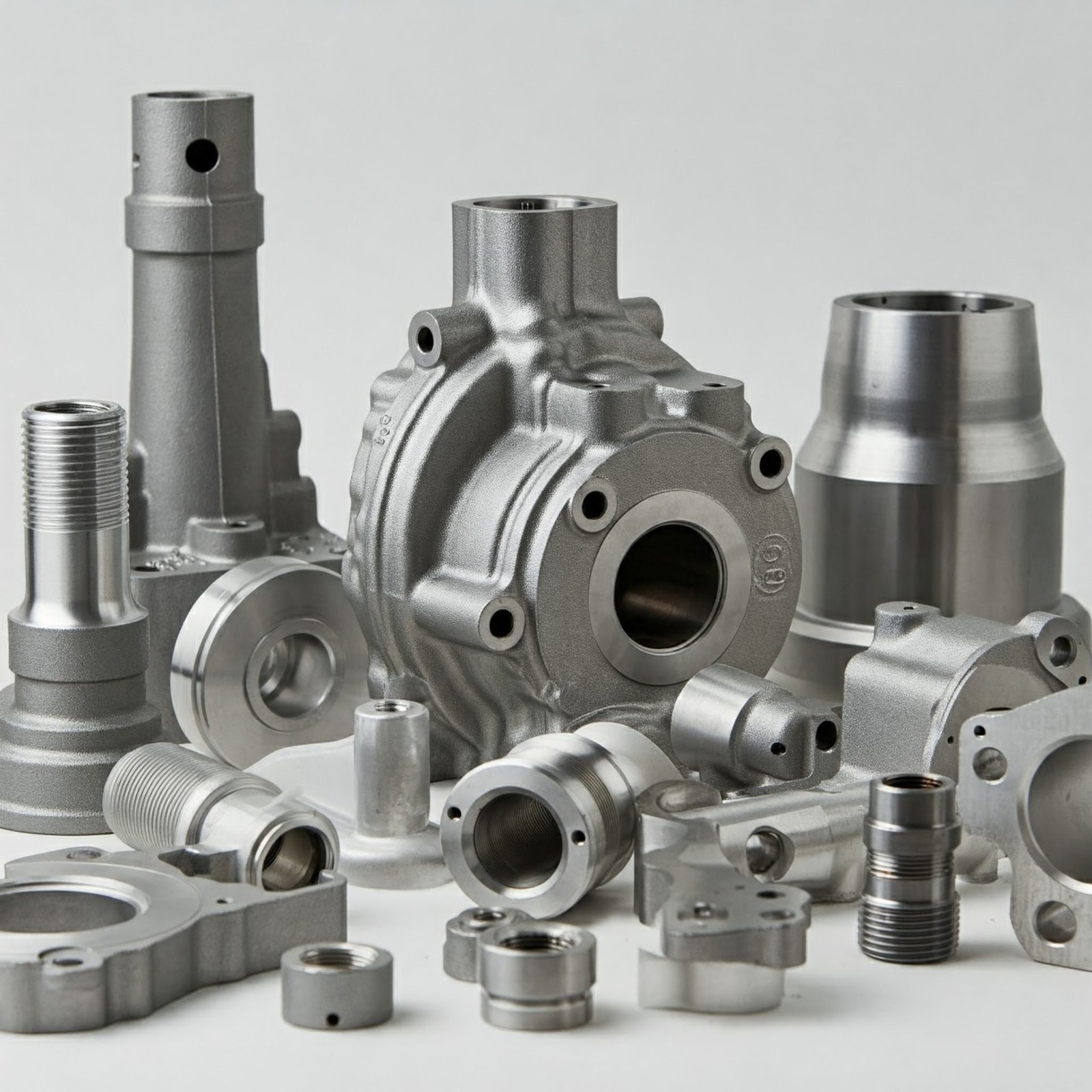
Durable and Precision-Engineered Aluminium Sand Casting Parts and Components
Our Aluminium Sand Casting Parts and Components are crafted with precision, offering excellent durability and reliability for a wide range of industrial applications.
High-quality Aluminium Sand Casting Parts and Components tailored for reliable performance and superior durability in industrial, automotive, and commercial sectors.
At Conex Aluminium Components, we specialize in manufacturing Aluminium Sand Casting Parts and Components for a variety of industrial and commercial uses. Our components are produced using advanced sand casting techniques, ensuring superior precision and durability. Made from premium aluminium alloys, they provide excellent corrosion resistance and lightweight properties, making them ideal for automotive, aerospace, and heavy machinery applications. Available in various shapes and sizes, these components meet the highest quality standards. Conex also offers customized solutions to meet specific project requirements, ensuring optimal efficiency and reliability.
Aluminium sand casting forms a component by pouring molten alloy into a single-use sand mould made around a pattern. Sand cores can create internal passages and complex cavities. The process accommodates large parts, substantial sections and low-to-medium production volumes with lower tooling investment than permanent-mould or pressure die casting.
Sand casting is attractive for large components, lower annual volumes, complex core geometry, thicker walls or projects requiring economical pattern tooling. Die casting offers faster cycles and finer surfaces at high volume. Selection depends on size, quantity, alloy, mechanical properties, tolerances, surface finish, internal passages, machining and tooling budget.
A range of aluminium casting alloys can be selected for fluidity, strength, corrosion resistance, machinability, weldability and heat-treatment response. The best grade depends on service temperature, pressure duty, environment and required mechanical properties. Material standard, chemistry, temper and certification should be stated on the technical drawing.
The pattern creates the external mould cavity, while core boxes produce sand cores for internal features. They include shrinkage, machining and draft allowances and may be made from wood, resin, metal or composite materials depending on volume and accuracy. Pattern design strongly influences dimensional consistency, moulding efficiency and casting quality.
Preformed sand cores are positioned inside the mould before pouring. Core prints, supports and dimensional controls locate them against buoyancy and metal flow. Core strength, gas generation, collapse and removal must be balanced. Passage size, wall thickness, cleaning access and leak requirements should be reviewed during pattern and core-box design.
Required thickness depends on alloy fluidity, flow length, part size, moulding process and feeding. Sand castings generally use more generous sections than high-pressure die castings. Uniform walls, radii and gradual transitions reduce misruns, shrinkage and hot spots. Final minimum thickness is confirmed after casting-method and geometry review.
Control begins with sound pattern allowances, clean melt, suitable gating, low-turbulence filling, vents, risers, chills and directional solidification. Risers feed liquid metal as the casting contracts. Heavy isolated sections should be avoided. Critical machined, loaded or pressure-containing zones must be identified so feeding and inspection focus on those areas.
Many suitable alloys can be solution treated and aged to improve strength or achieve a specified temper. Heat treatment can change dimensions or reveal residual stress, so machining sequence and distortion allowance require planning. Required properties, temper, test-bar method and acceptance criteria should be defined before casting production.
Capability depends on part size, pattern type, moulding method, core location, shrinkage, section thickness and production volume. Critical interfaces are often machined. Drawings should distinguish general cast tolerances from functional datums, bores, threads and sealing surfaces so pattern accuracy, machining allowance and inspection effort are applied appropriately.
Surface texture reflects sand grain, mould coating, pattern condition and cleaning method. Castings may be shot-blasted, ground, vibratory finished, machined, polished, painted or powder-coated. Cosmetic classes and visible surfaces should be defined, because achieving a smooth decorative finish may require additional preparation or a different casting process.
Operations can include milling datums, drilling, tapping, boring, turning and machining sealing, bearing or mounting faces. Adequate stock must cover casting variation without excessive weight. Fixtures should reference stable features, and machining plans must consider internal porosity, core shift and access before the pattern is released.
Pressure-tight components are possible with appropriate alloy, gating, feeding, wall design and process control. Specify fluid, pressure, temperature, permitted leak rate and test method. Machining can expose internal discontinuities, so sealing paths and cut surfaces require special attention. Impregnation should only be used when approved.
Use uniform walls, generous radii, practical draft, simple parting lines, accessible cores and clear machining datums. Reduce unnecessary undercuts, isolated heavy sections and overly tight as-cast tolerances. Designing standard machining stock and combining compatible features can lower pattern, moulding, cleaning and inspection cost.
Inspection may include alloy verification, visual and dimensional checks, mechanical tests, dye penetrant, radiography or ultrasonic testing where suitable, leak testing, sectioning and machining inspection. Requirements should target critical zones and realistic defect acceptance. First-article, material and traceability records can be supplied when specified.
Provide 3D CAD, controlled drawings, alloy and temper, annual quantity, dimensions and wall sections, tolerances, machining stock, cores and passages, heat treatment, pressure duty, finish, mechanical properties, inspection, traceability and packaging. Component weight, service environment and mating interfaces help define pattern, moulding and validation requirements.
Need Aluminium Sand Casting Parts and Components? Get a Fast, Detailed Quotation
Send your drawing (STEP, IGES, DWG, DXF or PDF) with material grade, finish and quantity. Our engineers reply with a DFM review, price and lead time. MOQ 10 pcs • ISO 9001:2015 • Exports to USA, UK, Europe, Canada & Australia.


