

Custom Aluminium Spacers for OEM Assemblies
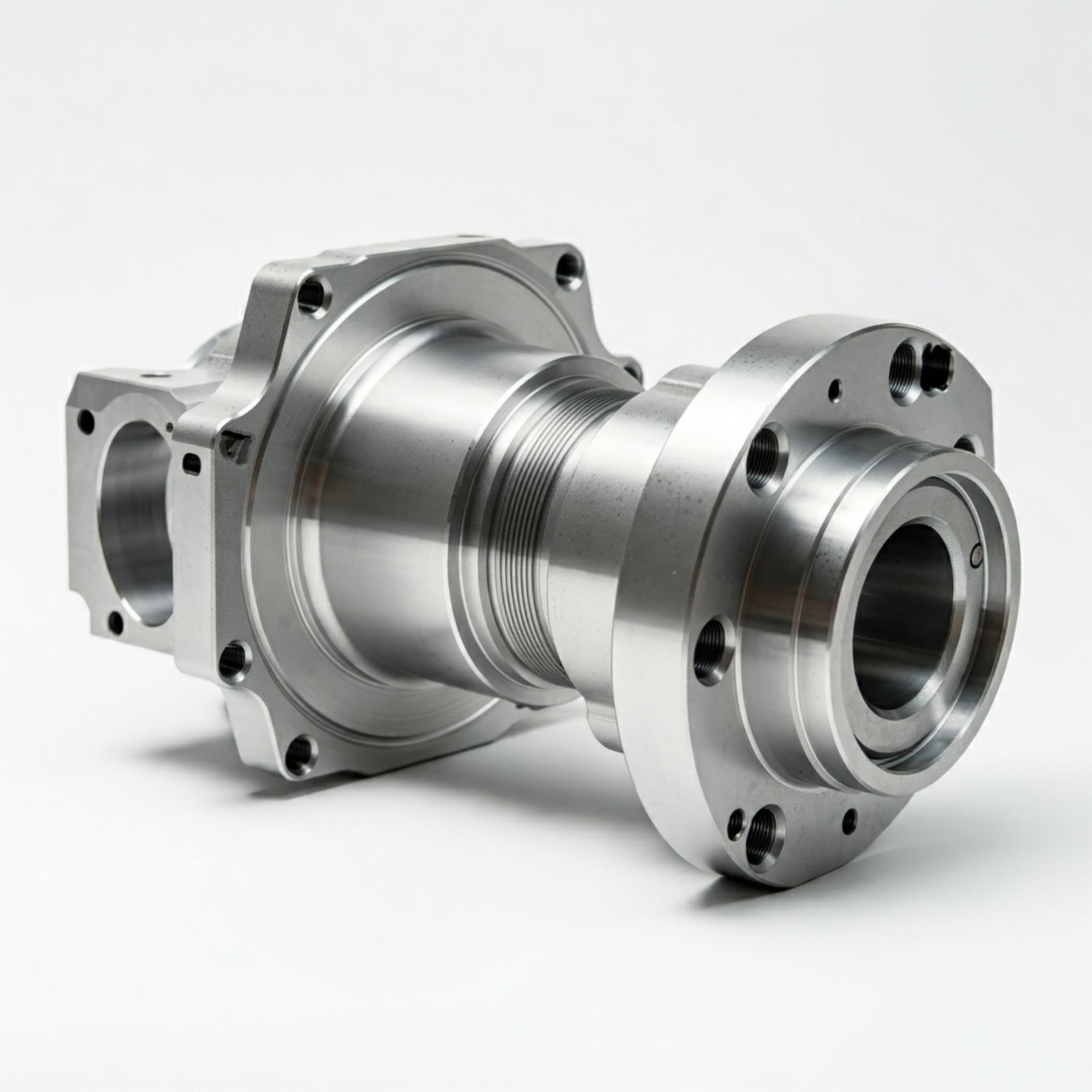
Conex supplies custom aluminium spacers for assemblies that require a controlled distance between mounting surfaces. From a simple tubular sleeve to a stepped or flanged component, the drawing defines the finished length, bore, outside profile and contact faces. These details help purchasing and engineering teams specify a repeatable component for panels, equipment frames, fixtures and electronic assemblies.
Spacer designs for your assembly
Round spacers provide a compact cylindrical profile around a through bolt. Hexagonal spacers provide flat external faces where the assembly layout calls for them. Shoulder spacers use a reduced diameter section to locate in a mating hole, while flanged designs provide a wider contact area at one end. A drawing should identify which features locate the part and which simply provide clearance.
For a multi-part assembly, consider the complete stack of panels, washers and spacers. Specifying each spacer in isolation can leave an unwanted gap or introduce variation in the final assembly height. Mark the dimension that controls the assembled position and identify any matched sets required for parallel mounting surfaces.
Dimensions to include on the drawing
Start with overall length, outside diameter and bore diameter. For stepped parts, add shoulder diameter, shoulder length and the transition detail. Flanged parts also need flange thickness and diameter. Identify chamfers, edge breaks and any surfaces that must remain free of sharp edges. State whether dimensions apply before or after the specified finish.
Length tolerance, end-face parallelism and perpendicularity to the bore should reflect the function of the part. A mounting sleeve used only to create clearance may have different requirements from a spacer that establishes a precise location in a fixture. Identify critical dimensions explicitly so quotation and inspection focus on the features that affect assembly.
Material and finish requirements
Specify both the aluminium alloy and its temper where these are controlled by the design. If an existing component is being replaced, include the material designation from the original drawing or purchase specification. Where material selection is still open, send the application details with the enquiry so the proposed material can be reviewed before manufacture.
Finishing requirements should include the coating type, colour where relevant, and any masking instructions. For anodized parts, identify close-fitting bores and contact faces that require particular attention. Cosmetic appearance, surface texture and acceptable machining marks should be agreed using a drawing note or reference sample when the spacer remains visible in the finished equipment.
Applications and assembly details
Aluminium spacers are used to establish separation between equipment panels, mounting plates, brackets and other components. In electronic equipment, they can position a board or internal plate at the required height. In machinery, custom sleeves can support an assembly layout or provide a defined distance around a fastener. The application determines the required dimensions and acceptance criteria.
Include the mating fastener size and the actual clearance required through the spacer. If the assembly needs a threaded fixing, review our aluminium standoffs. For parts with additional pockets, mounting holes or complex profiles, explore our custom milled and machined aluminium components.
Inspection and repeat orders
Define inspection requirements with the enquiry, including the drawing revision, critical dimensions and any material or dimensional documentation required with delivery. For a first order, identify the sample approval process and the features your team will check during assembly trials. This gives both parties a common reference before repeat production.
For repeat orders, quote the same part number and approved drawing revision. Changes to length, bore, finish or material should be recorded as a revision so that visually similar spacers can be distinguished. Packaging requirements can also specify separate identification for each size, protection of finished surfaces and quantities per bag or carton.
Request a quotation for custom aluminium spacers
Send a dimensioned drawing, the required alloy and temper, surface finish, sample quantity and production quantity. Include annual usage if you want pricing for repeat supply. A 3D model is helpful for stepped or more complex parts, supported by a 2D drawing showing tolerances and inspection notes.
For an existing spacer, include photographs and the available specification with your enquiry. Highlight any assembly issue you want addressed, such as inconsistent spacing or interference at the bore. Contact Conex to discuss the drawing and obtain a quotation for your required configuration.
Frequently asked questions about aluminium spacers
What are aluminium spacers and how are they different from standoffs?
Aluminium spacers are unthreaded round or hex sleeves with a clearance hole that set a fixed gap between two components, with a bolt passing through them. Standoffs are threaded (male or female) so they fasten components themselves. Spacers are used on PCBs, panels, machinery, structures and electrical assemblies.
Which sizes of aluminium spacers are available?
We produce spacers for screw sizes from M2 to M24 and #2 to 1 inch, with outside diameters, lengths and hole sizes to your drawing. Round, hex, square, flanged and shouldered spacers are available, and custom lengths do not require special tooling.
Which aluminium grades are used for spacers?
6061-T6 is the standard grade for strength and anodizing; 2011-T3 is used for high-volume turned spacers; 6063 tube is used for long, lightweight spacers; and 7075-T6 is used where high compressive loads are expected.
What length tolerance and end-face parallelism can you achieve?
Standard length tolerance is ±0.05 mm, and precision spacers can be held to ±0.02 mm with end faces parallel within 0.02 mm and square to the bore. This matters where spacers set bearing preload, gear mesh or optical alignment.
Round or hex aluminium spacers – which is better?
Round spacers are cheaper and suit most clearance applications. Hex spacers can be held with a spanner during assembly, sit flat against adjacent components and are preferred on panels and PCBs where anti-rotation or a wrench flat is useful.
What finishes are available for aluminium spacers?
Plain/natural, clear anodized, black anodized and colour anodized (red, blue, gold, green and others) for identification, as well as chromate conversion where electrical conductivity is needed. Bead-blasted matt finishes are available for cosmetic parts.
How much load can an aluminium spacer take?
Compressive capacity is approximately the load-bearing annular area multiplied by the alloy’s yield strength – about 275 MPa for 6061-T6 and 500 MPa for 7075-T6 – with an appropriate safety factor. For long, thin spacers, buckling should also be checked. We can advise on wall thickness for your bolt preload.
Can aluminium spacers be used with stainless steel bolts?
Yes, this is very common. In humid or outdoor environments, anodized spacers and stainless or coated bolts reduce galvanic corrosion; adding an insulating washer or anti-seize compound gives extra protection in marine or chemical environments.
Are aluminium spacers electrically conductive?
Bare and chromate-conversion-coated aluminium spacers conduct electricity and can be used as ground paths. Anodizing creates an electrically insulating surface layer, but it should not be relied on as a rated insulator; for true isolation use nylon or ceramic spacers or insulating sleeves.
Why are aluminium spacers used instead of steel or brass?
Aluminium is about one third the weight of steel and brass, naturally corrosion resistant, non-magnetic, easy to colour anodize and cost-effective to machine. It is ideal for electronics, aerospace interiors, solar mounting, robotics, signage and lightweight machinery.
Do you supply shoulder and flanged spacers?
Yes. Shoulder spacers locate parts in a bore, and flanged spacers spread load or retain components. Both are turned in one setup for good concentricity between the shoulder or flange and the bore.
Are the ends of the spacers chamfered and deburred?
Yes. Both ends are chamfered or radiused and the bore is deburred so the spacer sits flat, bolts pass freely and there are no sharp edges or loose burrs that could damage PCBs, wiring or coatings.
Can you make spacers to non-standard sizes?
Yes. Any OD, ID and length within our turning capacity can be produced from an MOQ of 10 pieces, including metric and imperial clearance holes, eccentric bores, slotted or cross-drilled spacers and spacers with knurled outer surfaces.
How are aluminium spacers packed?
Spacers are counted and bagged by quantity with labelled part number, size and finish. Anodized or cosmetic spacers are packed to avoid scuffing, and export shipments are packed in cartons on pallets with VCI protection where required.
How do I order or get a quote for aluminium spacers?
Tell us the screw size (or bore), outside diameter or hex size, length, grade, finish and quantity, or send a drawing. We will confirm the specification and quote per-piece prices for your volume, with samples available before bulk orders.
Discuss your aluminium spacer requirements
Send your drawing, material, finish and quantity to sales@conexaluminium.com or request a quotation.