About Conex

Welcome to Conex Aluminium Components, a leading manufacturer and exporter of high-quality, precision-engineered non-ferrous metal components worldwide.

Contact Info

  • Plot 1, Street No 1, Road No 1
  • sales@conexaluminium.com
  • Sat - Thu: 09.00 to 18.00

Aluminium Engine Components

Conex > Products Range > Aluminium Machined Components > Aluminium Engine Components

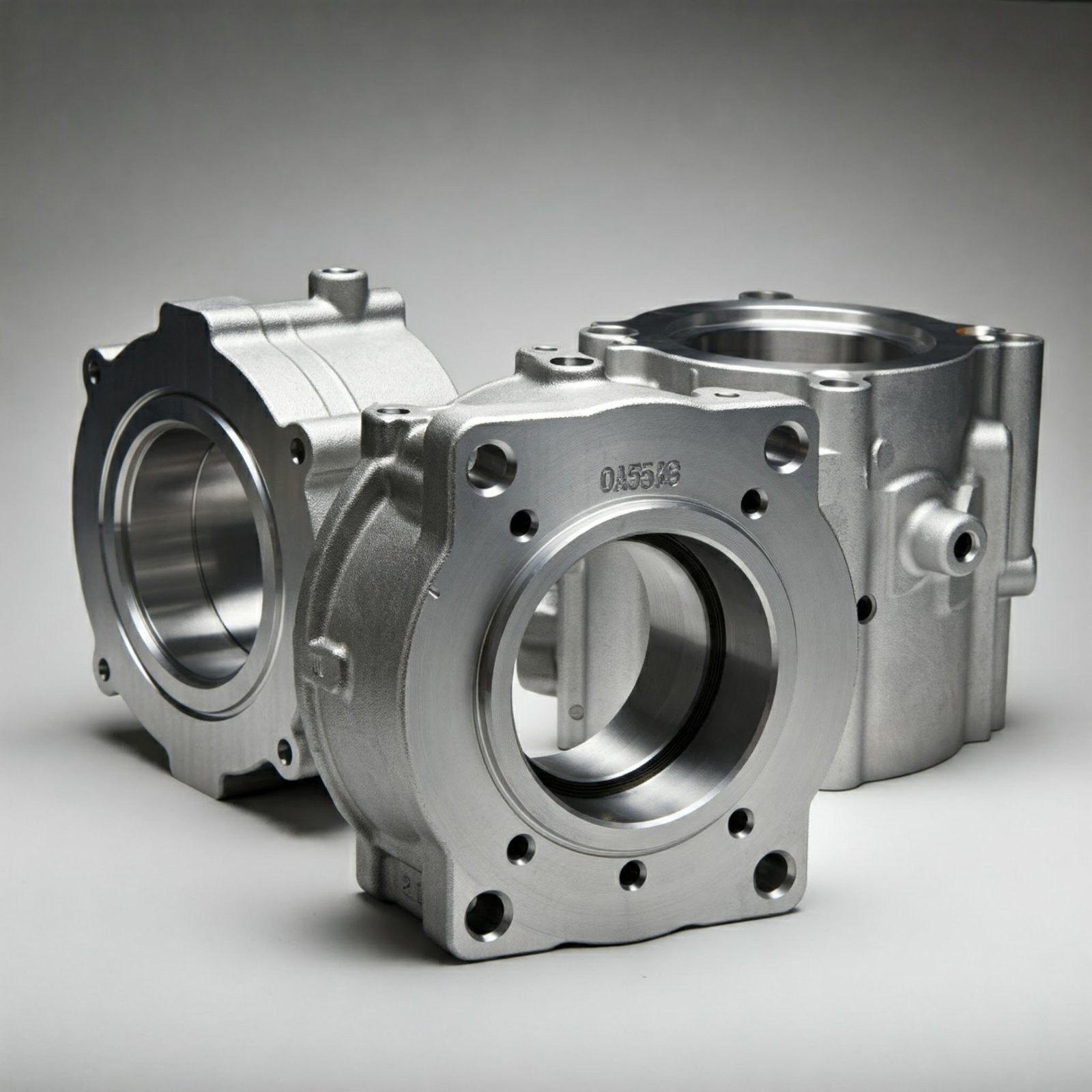
High-Precision Aluminium CNC Machined Components for Industrial Use

Our aluminium machined components are crafted with precision and designed for durability. Ideal for various industrial applications, they offer superior strength, lightweight properties, and excellent resistance to corrosion, ensuring reliable performance.

Engineered to perfection, our aluminium machined components deliver unmatched quality, strength, and reliability for diverse industrial needs.

At Conex Aluminium Components, our aluminium machined components are produced using advanced CNC machining technology, ensuring exceptional precision and consistency. These components are suitable for a wide range of applications across industries such as automotive, aerospace, electronics, and more. Made from high-quality aluminium, they offer excellent corrosion resistance, lightweight properties, and superior mechanical strength. With a focus on quality and innovation, we provide customized solutions to meet the sp

6061-T6 and 6082-T6 are used for brackets, pulleys and flanges; 7075-T6 for highly stressed performance parts; 2618 and 4032 for elevated-temperature parts such as forged piston-type components; and A356-T6 / LM25 castings for housings and covers. The choice depends on operating temperature, load and corrosion exposure.

6061-T6 and 7075-T6 start to lose strength noticeably above about 150 °C with long exposure, so they are best for components away from the combustion area. Alloys like 2618 and 4032 retain strength better at 200 °C and above. We help select an alloy for your actual temperature and duty cycle.

Aluminium expands about twice as much as steel (approx. 23 µm/m·°C versus 12 µm/m·°C). Clearances, press fits, gasket compression and bolt preload must be calculated at operating temperature, not just room temperature. Our engineering team reviews fits and bore tolerances on your drawing with this in mind.

Sealing faces on housings and covers are typically machined to a flatness of 0.05 mm or better with a surface finish of Ra 0.8–1.6 µm, matched to the gasket type (MLS, paper, rubber or O-ring). Flatness is verified on a surface plate or by height gauge before dispatch.

Aluminium threads that take steel bolts or repeated service are reinforced with helical coil (Helicoil-type) or key-locking inserts, or designed with longer thread engagement (typically 1.5–2 × bolt diameter). Threads are gauged with go/no-go gauges and can be supplied with inserts pre-installed.

Aluminium performs well in modern glycol coolants with corrosion inhibitors and in engine oils. To protect against coolant corrosion, galvanic attack and staining we can hard anodize, clear anodize or chromate conversion coat the parts, and we recommend stainless or coated fasteners in coolant passages.

Yes. Coolant, oil and fuel-carrying housings and adapters can be leak tested (air-under-water or pressure decay) at the pressure you specify. Castings with micro-porosity can be vacuum impregnated before testing to guarantee leak-tight performance.

Chips and burrs are a major cause of engine failures, so internal passages are deburred, cross-holes are checked, and parts are washed and dried before packing. Cleanliness requirements to ISO 16232 / VDA 19 style limits can be agreed, and parts are sealed in clean bags to prevent contamination in transit.

Aluminium has a density of about 2.7 g/cm³ versus 7.85 g/cm³ for steel, so an equivalent-volume part weighs roughly one third as much. Even after adding section thickness to match stiffness, aluminium brackets, pulleys and housings typically deliver 40–60% weight savings, improving efficiency and reducing rotating mass.

Hard anodizing is used for wear surfaces such as pulley grooves and sliding faces, black or colour anodizing for performance and aftermarket parts, chromate conversion where electrical grounding is needed, and powder coating for cast covers. Each finish is chosen for heat, chemical and abrasion resistance.

Yes. On request we provide PPAP-style documentation including dimensional reports, material certificates, process flow, control plan and capability data for critical characteristics, along with first-article inspection reports for new part numbers.

Yes. With an MOQ of just 10 pieces we support motorsport, restoration and aftermarket programs as well as OEM series production. Custom parts can be machined from billet for small runs and moved to casting or forging when volumes increase.

Yes. Send us a sample or worn part and we can measure it, create a 3D model and drawing, recommend an equivalent or improved aluminium alloy and finish, and produce prototypes for fit testing before series production.

Please share the 3D model and 2D drawing, alloy preference, operating temperature and fluids, finish, any leak-test or cleanliness requirements, and annual quantity. We will reply with a DFM review, sample lead time and piece price.

Need Aluminium Engine Components? Get a Fast, Detailed Quotation

Send your drawing (STEP, IGES, DWG, DXF or PDF) with material grade, finish and quantity. Our engineers reply with a DFM review, price and lead time. MOQ 10 pcs • ISO 9001:2015 • Exports to USA, UK, Europe, Canada & Australia.