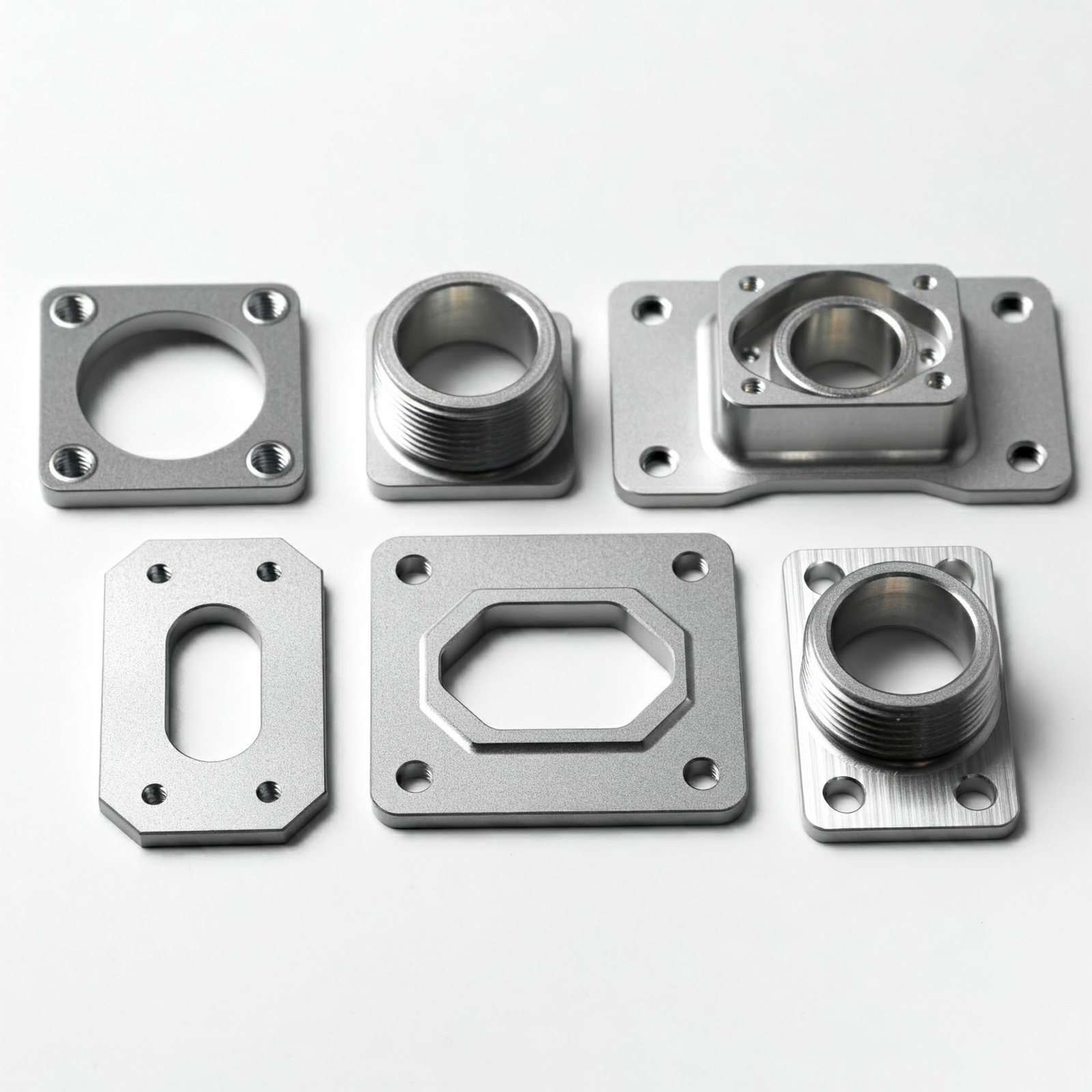
Durable Aluminium Back Plates and Mounting Plates for Secure Installations
Conex manufactures custom aluminium back plates and mounting plates for electrical enclosures, control panels, machinery and equipment assemblies. Plates are supplied to drawing with repeatable profiles, hole patterns, threads, inserts and surface finishes.
Ready for efficient equipment installation: laser cutting, punching, CNC machining, countersinking, tapping and hardware insertion can be combined so components arrive prepared for assembly.
Custom aluminium back plates and mounting plates
Products range from simple flat equipment plates to stiffened, flanged or machined mounting panels. We can produce prototypes and low-volume parts directly from CAD data, then introduce fixtures or dedicated tooling when repeat demand justifies it.
Flatness, threads and surface requirements
Thickness and alloy are selected around plate size, supported span, equipment weight, thread engagement and required flatness. Threaded holes, studs, clinch fasteners and inserts can be incorporated where direct tapping is unsuitable. Finish options include natural, brushed, anodized, conversion-coated and powder-coated surfaces.
Electrical integration and inspection
Where the plate forms part of a protective bonding path, coating and anodic-film removal around earthing points must be defined. Inspection can cover profile, hole position, flatness, thread gauges, inserted hardware and finish. Datum locations and critical component interfaces should be identified on the drawing.
Aluminium back plate and mounting plate FAQs
These answers cover common choices for thickness, fasteners, finishes, electrical use and custom manufacture. Final tolerances and stiffness are confirmed from plate size, loading and mounting conditions.
Aluminium Back Plates Mounting Plates are used electrical panels, control cabinets, machinery and equipment bases that need a lightweight mounting surface. Their design should be based on flatness, hole pattern, thread requirements, stiffness and electrical bonding provisions.
Aluminium reduces weight, resists corrosion in many environments and is readily cut, formed and machined. Alloy, temper and section thickness should be selected for strength, stiffness, bendability, fatigue, temperature and finish requirements.
A typical route may include sheet cutting, punching, drilling, machining and finishing. The exact sequence depends on geometry, volume, tolerance, cosmetic surfaces and whether dedicated tooling is justified.
Yes. Conex manufactures aluminium back plates mounting plates to customer drawings and application requirements. Dimensions, interfaces, material, finish, identification, inspection and packaging can be tailored after an engineering review, subject to process capability and order quantity.
Selection depends on required strength, formability, corrosion resistance, weldability, machinability and finish. Highly formed parts may need a different temper from stiff mounting plates, so Conex reviews the complete drawing before confirming material.
The drawing should define overall envelope, material thickness, bend radii, hole and slot locations, edge distances, mounting interfaces, load direction and any mating parts. Functional datums and critical-to-assembly dimensions should be clearly identified.
Tolerance capability depends on blanking method, material thickness, bend sequence, springback, tooling and part size. Precision holes or interfaces can be machined after forming when needed; a realistic datum scheme prevents unnecessary cumulative tolerance.
Where suitable, parts can incorporate welding, riveting, clinching, threaded inserts, tapping or bolted assembly. Joint design must consider heat distortion, access, corrosion compatibility, load transfer and the required inspection method.
Options can include mill finish, deburring, brushing, polishing, anodising, conversion coating, painting or powder coating. Drawings should identify coating thickness, colour, masking, electrical contact points and cosmetic acceptance zones.
Load capacity depends on material, thickness, geometry, support conditions, fasteners and direction or duration of loading. The customer should provide design loads, safety factors and applicable codes; prototype or validation testing can then be planned where required.
Inspection may cover material and thickness, formed dimensions, hole position, flatness, bend angle, threads, surface finish and assembly fit. First-article reports, gauges and sample-based inspection can be arranged when specified before production.
For an accurate quotation, provide a controlled drawing or 3D model, material or alloy requirement, critical dimensions and tolerances, finish, order quantity, annual demand, application and any inspection or documentation needs. Conex reviews manufacturability before confirming tooling, process route, lead time and commercial terms.
Back plates are typically made from 2–6 mm aluminium sheet or plate in 5052, 5754 or 6061, depending on load, stiffness and whether the plate is bent or machined.
Yes. Plates can be supplied with PEM-type clinch nuts, studs and standoffs, rivet nuts or tapped holes, so components can be mounted directly without loose nuts.
Yes. Aluminium plates are widely used as panel back-plates. Chromate conversion coating is used where a conductive earth path is needed, and anodizing or powder coating is used for insulation and appearance.
Need Aluminium Back Plates Mounting Plates? Get a Fast, Detailed Quotation
Send your drawing (STEP, IGES, DWG, DXF or PDF) with material grade, finish and quantity. Our engineers reply with a DFM review, price and lead time. MOQ 10 pcs • ISO 9001:2015 • Exports to USA, UK, Europe, Canada & Australia.