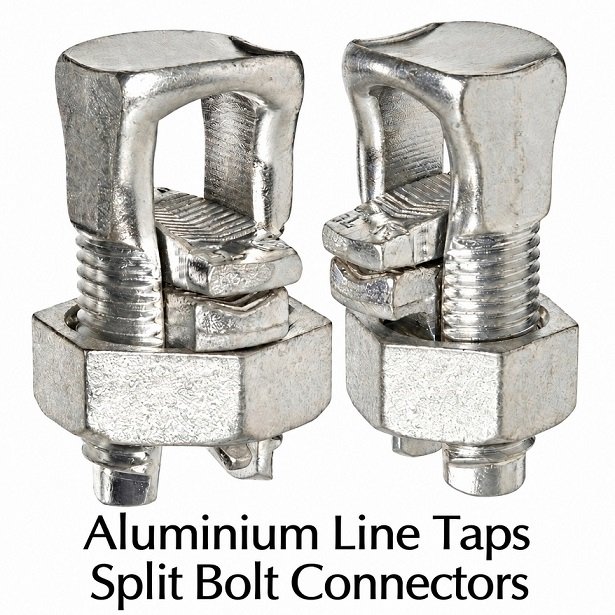
Durable Aluminium Line Taps Split Bolt Connectors
Our aluminium line taps split bolt connectors are crafted for secure electrical connections, offering excellent conductivity, corrosion resistance, and ease of installation.
Precision-engineered aluminium line taps split bolt connectors, ensuring reliable performance and durability in electrical systems.
At Conex Aluminium Components, we manufacture high-quality aluminium line taps split bolt connectors designed for electrical and industrial applications. These connectors are ideal for splicing and tapping conductors in power distribution and electrical systems. Made from premium-grade aluminium, they provide superior conductivity, high resistance to corrosion, and a strong mechanical grip. Our connectors are available in various sizes to accommodate different conductor diameters and are easy to install, ensuring safe and reliable performance under demanding conditions.
Aluminium line tap split-bolt connectors create removable branch taps, parallel joints and conductor splices in power-distribution and industrial electrical systems. The split body, clamping nut and pressure interface develop mechanical grip and a low-resistance current path when the connector is correctly matched and torqued.
Compatibility depends on the connector’s approved conductor range and material designation. Models intended for aluminium conductors may accept stranded aluminium, AAC or specified aluminium-alloy conductors; copper or mixed-metal joints require a connector explicitly rated for that combination to control galvanic corrosion and differential expansion.
Select the connector from the actual main and tap conductor cross-sections, strand construction and outside diameters, not from cable insulation size. Both conductors must fall within the manufacturer’s published range so the grooves clamp evenly without strand damage or insufficient contact pressure.
The conductor grooves and separator or pressure pad distribute force across the strands and keep the main and tap conductors correctly positioned. Proper geometry increases contact area, limits strand deformation and helps maintain stable resistance through load and temperature cycles.
De-energize and verify the circuit, strip only the required insulation length, and clean the exposed aluminium with an approved non-steel brush to remove oxide without damaging strands. Install promptly after cleaning and follow the specified joint-compound and connector instructions.
Oxide-inhibiting compound is commonly specified for aluminium conductor joints because it excludes moisture and disrupts insulating oxide films. Use only a compound compatible with the conductor, connector and service temperature, and follow the utility or equipment specification rather than adding unapproved materials.
Use the connector manufacturer’s stated installation torque for the exact size and conductor combination. A calibrated torque wrench is preferred because under-tightening can raise contact resistance, while over-tightening can strip threads, distort the body or damage conductor strands.
Low resistance depends on clean mating surfaces, adequate metallic contact area and sustained clamping pressure. Correct sizing, oxide removal, approved inhibitor and controlled torque reduce interface films and micro-movement that can otherwise produce heating at the joint.
Only use a connector specifically identified and approved for aluminium-to-copper service. Direct mixed-metal contact in an unsuitable connector can accelerate galvanic corrosion, so the design may require a bimetallic interface, separator, plating and compatible inhibitor.
They can be used outdoors when the connector, insulation system and enclosure method are rated for the environment. Moisture sealing, drainage, pollution level, salt exposure, UV resistance and galvanic compatibility must be addressed according to the project and utility requirements.
Load cycling causes conductor expansion and contraction, while vibration can promote fretting at poorly secured interfaces. A correctly engineered connector maintains contact pressure through these conditions, but installation torque, conductor support and periodic inspection remain important for demanding service.
Reuse should be permitted only when the manufacturer’s instructions explicitly allow it. Threads, bearing surfaces, grooves and plating must be undamaged and clean; connectors showing galling, distortion, overheating or corrosion should be replaced rather than reinstalled.
Frequent causes include the wrong connector size, oxide-contaminated conductor, omitted or incompatible inhibitor, strands outside the groove, inadequate torque, over-tightening and unsupported cable movement. Each issue reduces effective contact area or clamping stability and can increase joint resistance.
Inspection should confirm conductor range, insertion, strand condition, hardware engagement, specified torque and environmental sealing. Depending on the system, technicians may also use millivolt-drop, resistance or infrared thermography checks under controlled load to identify abnormal heating.
Provide main and tap conductor materials, constructions, cross-sections and diameters; electrical current and voltage context; installation environment; applicable standard; torque or hardware requirements; finish, testing, certification and order quantity. Drawings or samples help Conex evaluate groove geometry, alloy, tooling and dimensional tolerances.
Need Aluminium Line Taps Split Bolt Connectors? Get a Fast, Detailed Quotation
Send your drawing (STEP, IGES, DWG, DXF or PDF) with material grade, finish and quantity. Our engineers reply with a DFM review, price and lead time. MOQ 10 pcs • ISO 9001:2015 • Exports to USA, UK, Europe, Canada & Australia.