

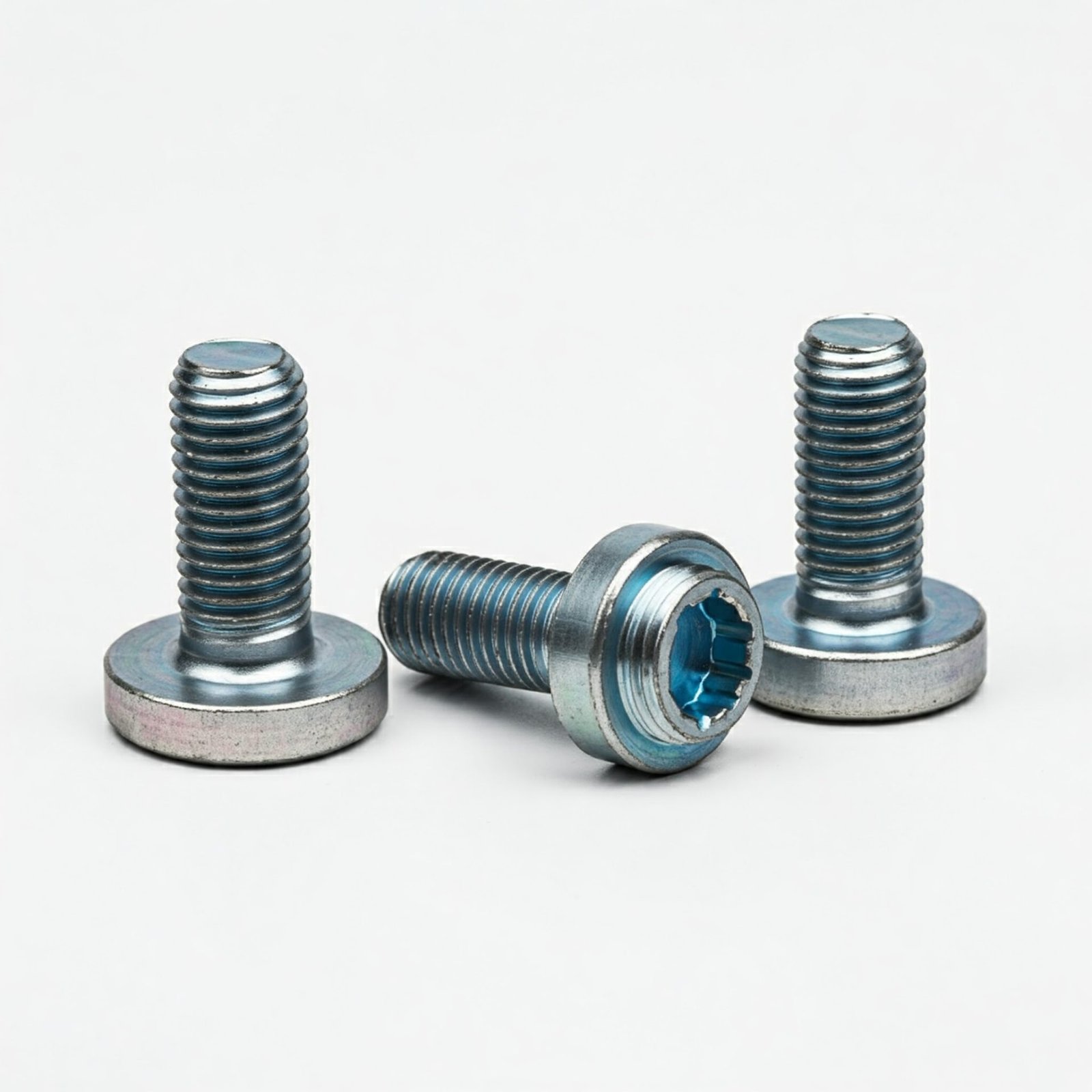
Durable and Precision-Engineered Cold Forged Aluminium Fasteners
Our cold forged aluminium fasteners are designed for exceptional strength and durability, providing reliable performance in diverse industrial applications.
Precision-crafted cold forged aluminium fasteners, delivering superior strength and lightweight properties for demanding applications.
At Conex Aluminium Components, we specialize in manufacturing high-quality cold forged aluminium fasteners, engineered for strength and precision. These fasteners are ideal for applications in automotive, aerospace, electronics, electrical equipment and construction. Cold forging provides high dimensional accuracy, smooth surface finishes and efficient material use. Our fasteners are lightweight, corrosion-resistant and available for standard or custom applications.
Types of Cold Forged Aluminium Fasteners
Cold forging can produce a broad range of lightweight fastening components with consistent dimensions and strong grain flow. The most suitable type depends on the joint design, load, installation method, service environment and required level of disassembly.
Cold Forged Aluminium Bolts
Aluminium bolts are used where weight reduction and corrosion resistance are important. Hex-head, flange-head, shoulder and special-profile bolts can be produced for automotive assemblies, electrical equipment, transport systems and industrial machinery. Threads may be rolled after heading to improve surface finish and fatigue performance.
Cold Forged Aluminium Screws
Machine screws and assembly screws can be cold headed with pan, button, countersunk, socket or application-specific heads. They are suitable for housings, panels, electronic equipment and other assemblies that benefit from low mass and a clean appearance. Metric, unified and special threads can be supplied to drawing.
Cold Forged Aluminium Rivets
Solid and semi-tubular aluminium rivets create permanent joints without requiring access for a nut. Their low weight and good formability make them useful in sheet-metal work, transport equipment, electrical products, nameplates and general fabrication. Head shape, shank diameter and length can be matched to the grip range of the assembly.
Cold Forged Aluminium Pins
Precision pins are used for location, alignment, pivoting or retention. Cold forming can produce headed pins, stepped pins, grooved pins and special locating features with repeatable geometry. Secondary machining, cross drilling or surface finishing can be added when the application requires tighter functional details.
Cold Forged Aluminium Studs
Aluminium studs provide a fixed threaded connection for equipment housings, electrical assemblies and lightweight structures. They may be fully threaded, double-ended, shouldered or formed with an installation feature. Alloy, thread engagement and tightening torque should be selected for the required service load.
Cold Formed Aluminium Nuts and Inserts
Nuts, collars and threaded inserts can be designed for lightweight fastening systems where compatible materials and controlled assembly are important. Options may include hexagonal, flanged, knurled or special anti-rotation forms. Final geometry and strength depend on the alloy, wall thickness and mating fastener.
Thread-Forming and Self-Tapping Aluminium Fasteners
Special screws can be engineered to form or cut a mating thread during installation, reducing the number of separate components in suitable assemblies. Point style, thread geometry, driving torque and substrate material must be evaluated together to prevent stripping and achieve reliable clamp load.
Custom Cold Forged Aluminium Fasteners
Custom parts can combine heads, shoulders, collars, pilots, drive recesses and non-standard thread forms in one component. A drawing review helps determine what can be formed directly and where secondary operations are needed. This approach can reduce machining, material waste and assembly steps for repeat production.
Cold forged aluminium fasteners are bolts, screws, rivets and pins formed by cold heading aluminium wire at room temperature, then thread rolled, heat treated where needed and finished. The process produces strong fasteners quickly and with very little scrap.
5052 and 5056 are used for rivets and general fasteners because they head well without heat treatment, while 6061, 2024 and 7075 are used for higher-strength bolts and screws that are heat treated after forming.
Typical diameters are M2 to M12 (#2 to 1/2 in) with lengths up to about 100 mm, depending on head style and header capacity.
Cold forging keeps unbroken grain flow through the head-to-shank radius, improving strength and fatigue life. It also uses 80–95% of the wire, cutting material cost compared with machining from bar.
Yes. Threads are roll formed after heading, which work-hardens the thread roots, increases fatigue strength and gives smooth, accurate flanks.
Fasteners are made to ISO, DIN and ASME standards or customer drawings, such as ISO 7045 pan head screws, ISO 4762 socket cap screws and DIN 660/661 rivets.
Clear, black and colour anodizing, chromate or trivalent conversion coating, and wax or dry-film lubricants that control tightening torque are available.
Heat-treatable alloys such as 2024 and 7075 are solution treated and aged to reach specified strength. Non-heat-treatable 5000-series fasteners rely on work hardening from forming.
Cold forging is most economical for high volumes, typically tens of thousands of pieces and above, because each fastener needs dedicated heading tools.
Yes. Special heads, shoulders, collars, drives and pilot points can be formed to drawing.
Thread gauging, dimensional checks, tensile and shear tests, head soundness checks and visual inspection for cracks or laps are carried out.
Aluminium fasteners weigh about one third of steel fasteners of the same size, a major saving in aerospace, automotive and electronics assemblies.
Fasteners are counted or weighed into labelled bags and cartons showing size, finish, lot number and quantity.
Heading tools take 3–5 weeks and production follows in 4–6 weeks after sample approval.
Please share the drawing or standard, alloy, finish, strength requirement and annual quantity.
Cold forged aluminium fasteners are used in automotive assemblies, electrical and electronic equipment, aerospace and transport systems, renewable-energy hardware, construction products and general industrial machinery. They are especially useful where low weight, corrosion resistance, non-magnetic behaviour or good electrical conductivity is important.
Aluminium naturally forms a protective oxide layer and performs well in many outdoor, marine and industrial environments. Anodizing or conversion coating can provide additional protection. Where aluminium contacts carbon steel, copper or other dissimilar metals, the joint should be designed with suitable coatings, washers or sealants to reduce galvanic-corrosion risk.
Yes. Custom cold forged fasteners can be produced with hex, pan, button, countersunk, flange, shoulder and application-specific head forms, together with common or proprietary drive styles. Metric, unified and special thread forms are available subject to diameter, alloy, geometry, tooling and order volume.
Cold forging forms aluminium at or near room temperature, giving close tolerances, a smooth surface and efficient high-volume production for smaller fasteners. Hot forging heats the material before forming and is better suited to larger sections or shapes that require more metal flow. The best process depends on alloy, size, geometry, strength requirements and quantity.
Use clean, compatible mating threads and controlled tightening equipment. Because aluminium has different strength and friction characteristics from steel, avoid applying a generic steel-fastener torque value. The correct torque should be validated for the joint, alloy, coating and lubricant; suitable anti-galling lubrication may also be specified.
Yes. On request, orders can include material certificates, dimensional inspection reports, coating or finish records and lot traceability. If your project requires a specific inspection plan, sample approval, PPAP documentation or third-party testing, include those requirements with the drawing or enquiry so they can be reviewed before quotation.
Need Cold Forged Aluminium Fasteners? Get a Fast, Detailed Quotation
Send your drawing (STEP, IGES, DWG, DXF or PDF) with material grade, finish and quantity. Our engineers reply with a DFM review, price and lead time. MOQ 10 pcs • ISO 9001:2015 • Exports to USA, UK, Europe, Canada & Australia.


