

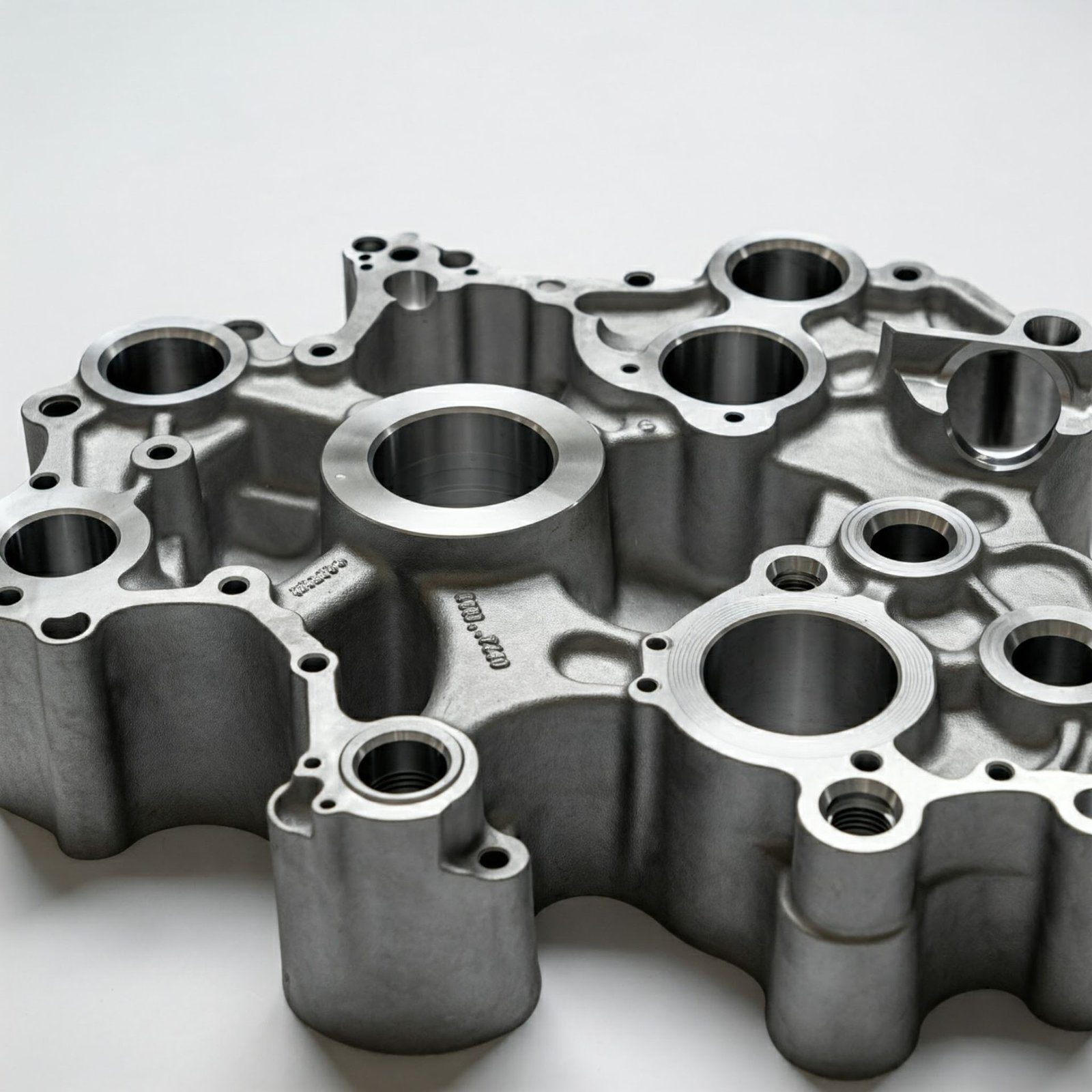
Durable and Precision-Engineered Aluminium Gravity Die Casting (GDC) Parts
Our Aluminium Gravity Die Casting (GDC) Parts are designed for precision and durability, ensuring excellent performance in diverse industrial and commercial applications.
High-quality Aluminium Gravity Die Casting (GDC) Parts tailored for superior performance, strength, and reliability in industrial and automotive sectors.
At Conex Aluminium Components, we specialize in manufacturing Aluminium Gravity Die Casting (GDC) Parts to meet the highest quality standards. Produced using advanced gravity die casting techniques, these parts offer excellent precision, strength, and durability. Made from premium aluminium alloys, our GDC components provide superior corrosion resistance and lightweight properties, making them ideal for automotive, aerospace, and heavy machinery industries. With a wide range of shapes and sizes available, we cater to diverse application needs. Conex also offers customization services to ensure optimal performance and compatibility with specific project requirements.
Gravity die casting pours molten aluminium into a reusable metal mould and fills the cavity mainly under gravity rather than high injection pressure. Controlled filling and solidification can produce robust parts with good surface finish and dimensional repeatability. The process suits medium production volumes and components needing thicker sections or heat treatment.
GDC fills a metal die more slowly under gravity, while high-pressure die casting injects metal rapidly under pressure. Gravity casting often supports thicker sections, lower trapped-gas porosity and heat-treatable alloys, whereas pressure die casting favours thinner walls and faster cycles. Part geometry, volume, properties, pressure tightness and tooling budget determine the better process.
Gravity casting can use aluminium-silicon and other casting alloys selected for fluidity, strength, corrosion resistance, machinability, pressure tightness and heat-treatment response. The correct grade depends on service temperature, mechanical properties, environment and post-processing. Material standards and certification requirements should be defined on the drawing or purchase specification.
Practical thickness depends on alloy fluidity, flow length, die temperature, gate design and component size. Uniform sections fill and solidify more consistently than abrupt thick-to-thin transitions. Generous radii, ribs and gradual changes reduce shrinkage and hot spots. Final minimum walls are confirmed through casting and tooling review.
Runners and gates deliver clean metal into the cavity with controlled flow, while risers feed liquid metal to compensate for solidification shrinkage. Their size and location influence turbulence, oxide inclusions, porosity and yield. A sound feeding system is designed around section thickness, solidification sequence and critical machined or pressure-containing zones.
Porosity control uses clean melt, suitable degassing, controlled pouring, low-turbulence gating, venting, directional solidification and effective riser feeding. Geometry and die temperature must avoid isolated hot spots. Critical pressure or machining areas should be identified early so feeding, chills and inspection can focus on the locations that matter.
Many suitable GDC alloys can be solution treated, quenched and aged to improve strength or stabilise properties, subject to alloy and geometry. Heat treatment can also cause distortion, so fixtures, process parameters and machining sequence require planning. Required temper, mechanical properties and test methods should be stated in the technical specification.
Yes, when geometry, alloy, melt quality, gating, feeding and process controls are designed for leak performance. Specify fluid, test pressure, operating temperature, permitted leak rate and test method. Machining and sealing interfaces must be considered because they can expose internal discontinuities. Impregnation should only be used if permitted by the customer.
Capability depends on part size, die construction, shrinkage, section thickness, cooling balance, tool wear and datum strategy. Critical fits or sealing faces are commonly machined. The drawing should separate functional tolerances from general cast dimensions so tooling, machining allowance and inspection effort are applied where they add value.
Secondary operations can include trimming, drilling, tapping, milling, boring, turning and machining of sealing, bearing or mounting faces. Stable casting datums and adequate machining allowance are essential. Tooling review should identify clamping points, cutter access and critical cut zones before the die is manufactured.
Parts may be supplied as-cast, shot-blasted, vibratory finished, polished, machined, conversion-coated, painted or powder-coated. Finish selection depends on alloy, surface condition, corrosion exposure and cosmetic requirements. Drawings should identify visible zones, texture, colour, coating thickness, masking and electrical-contact surfaces.
Good designs use balanced wall thickness, rounded transitions, suitable fillets and accessible feeding paths. Heavy isolated sections, sharp corners and sudden thickness changes promote hot spots and shrinkage. Ribs can add stiffness without creating mass. Early design-for-casting review helps establish parting line, draft, cores, gates, risers and machining stock.
Metal cores, sand cores or inserts may create internal passages, undercuts or integrated features, depending on tooling and alloy. Their thermal effect, location control, removal and bonding must be assessed. Inserts also require compatible material, clean surfaces and consideration of galvanic corrosion and differential expansion during casting and service.
Inspection can include alloy verification, visual and dimensional checks, mechanical-property tests, X-ray or sectioning where specified, leak testing, dye penetrant, machining inspection and coating verification. Critical zones, sampling and acceptance criteria should be agreed before production, with first-article and traceability documentation supplied as required.
Provide 3D CAD, controlled drawings, alloy and temper, annual and batch volumes, wall sections, tolerances, machining, heat treatment, pressure or leak duty, surface finish, mechanical properties, inspection, traceability and packaging. Service temperature, environment and mating interfaces help Conex assess tooling, feeding, cycle and finished-part requirements.
Need Aluminium Gravity Die Casting (GDC) Parts? Get a Fast, Detailed Quotation
Send your drawing (STEP, IGES, DWG, DXF or PDF) with material grade, finish and quantity. Our engineers reply with a DFM review, price and lead time. MOQ 10 pcs • ISO 9001:2015 • Exports to USA, UK, Europe, Canada & Australia.


