

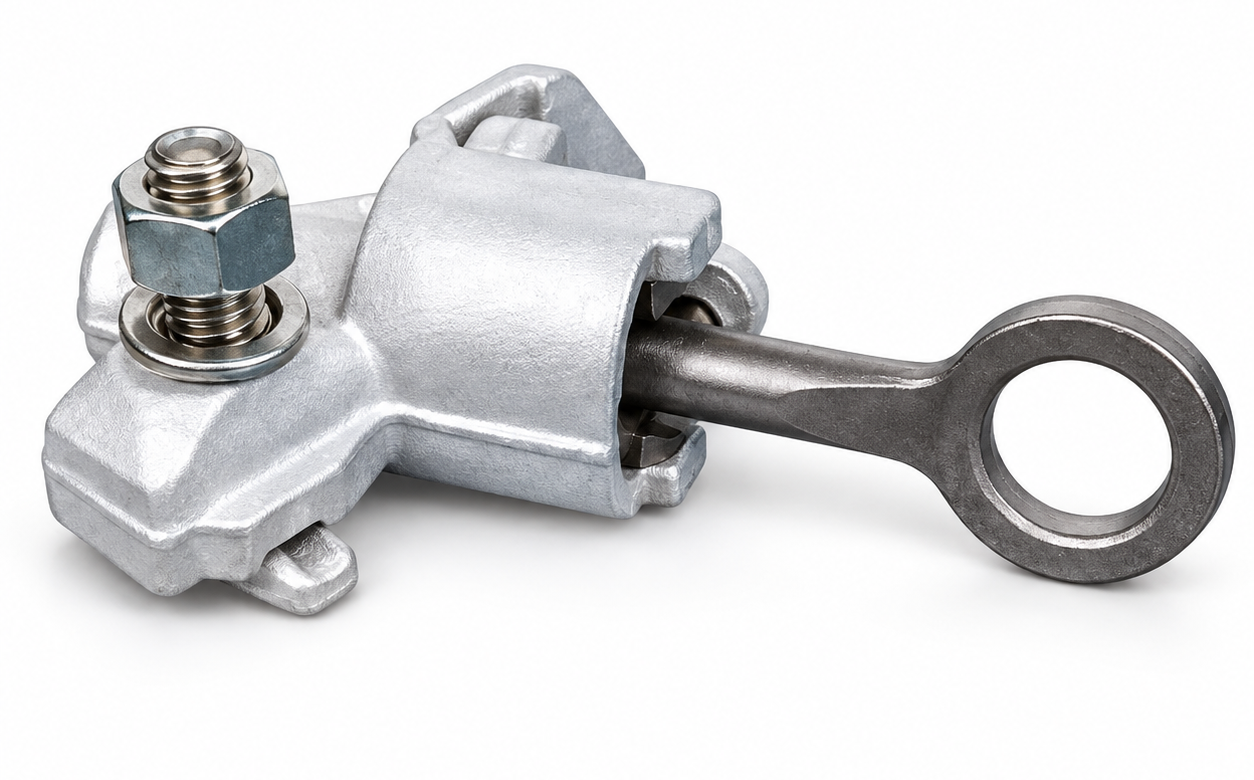
Aluminum Hotline Clamps: The Powerline Workhorse
Aluminum Hotline Clamps: The Powerline Workhorse
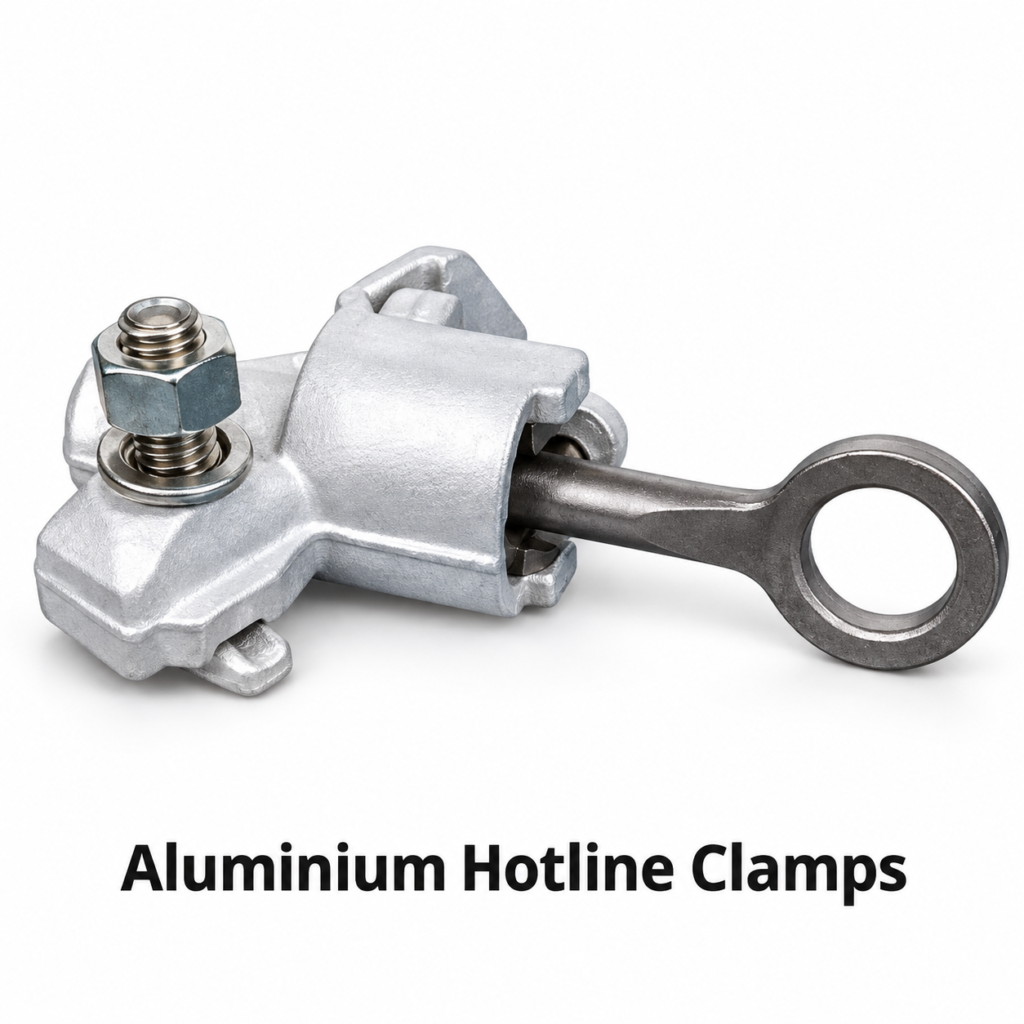
Overhead power networks depend on a long list of components that rarely receive public attention. Among the most important is the aluminum hotline clamp: a compact connector designed to establish a dependable electrical and mechanical connection on an energized or de-energized overhead conductor. Correctly specified clamps help utilities build taps, connect temporary equipment, perform maintenance and keep distribution systems operating reliably.
This guide explains how aluminum hotline clamps work, why aluminum is widely used, what engineers and buyers should specify, and how utilities can improve installation life. It is written for utility engineers, EPC contractors, electrical distributors, maintenance teams and procurement professionals.
What Is an Aluminum Hotline Clamp?
A hotline clamp is a removable connector used to attach a tap conductor, jumper or grounding lead to a main overhead conductor or bus. The clamp is normally operated with an insulated hot stick, allowing trained line personnel to install or remove it while following approved live-line procedures. Designs commonly include a body, conductor groove, movable jaw, threaded eye or operating screw, pressure pad and spring or retention features.
Hotline clamps must do two jobs simultaneously: maintain adequate contact pressure for low electrical resistance and withstand the mechanical loads caused by conductor movement, vibration, thermal cycling and installation forces. A suitable design also needs to remain operable after exposure to rain, pollution, ultraviolet radiation and temperature changes.
Why Aluminum Is Used for Powerline Clamps
Aluminum offers a useful balance of electrical conductivity, low mass, corrosion behaviour and manufacturability. It is especially compatible with aluminum overhead conductors when the correct alloy, surface preparation and joint compound are used.
- Low weight: lighter fittings reduce handling effort and added load on conductors.
- Useful conductivity: properly sized aluminum sections carry substantial current efficiently.
- Corrosion resistance: the natural oxide layer protects the base metal, although contact surfaces must be prepared correctly.
- Manufacturing flexibility: aluminum alloys can be forged, cast, machined and heat treated to produce strong, repeatable connector geometry.
- Economic value: aluminum often delivers a favourable cost-to-performance ratio for distribution hardware.
How a Hotline Clamp Carries Current
Current transfers across the real points of metal-to-metal contact between the conductor and clamp. Surface films, contamination, insufficient pressure or a poorly matched conductor range reduce the effective contact area and increase resistance. Higher resistance generates heat, and repeated heating can relax the joint further. That is why groove geometry, jaw alignment, thread quality and surface preparation matter as much as nominal ampacity.
Many aluminum connections use an approved oxide-inhibiting compound. The compound helps exclude moisture and disrupt oxide films during installation. It should be compatible with the conductor, clamp and utility procedure; it does not replace correct cleaning or tightening.
Typical Applications
- Temporary or permanent taps on overhead distribution conductors
- Bypass jumpers during maintenance or equipment replacement
- Connections to transformer leads and cutouts where the design permits
- Portable grounding arrangements using purpose-designed grounding clamps
- Substation and switchyard connections within the rated geometry
- Emergency restoration and load-transfer work
A hotline clamp should never be selected only because it physically fits. The application, conductor material, conductor size, continuous current, fault duty, installation method and environmental conditions must all be reviewed.
Key Design and Specification Parameters
Conductor range and geometry
Specify the main and tap conductor materials, constructions and diameter ranges. A clamp intended for stranded aluminum conductor may not provide the same contact on copper, covered conductor or an unusual strand profile.
Electrical rating
Define continuous current, anticipated load growth, temperature limits and any short-duration current requirements. The completed connection—not only the raw material—must satisfy the required performance.
Mechanical strength
Consider pull-out resistance, slip, tightening torque, vibration and the forces transmitted by jumpers. The operating eye and screw should withstand repeated field use without galling or deformation.
Material and finish
State the required aluminum alloy and temper, compatible hardware materials, plating or coating requirements and joint compound. Dissimilar-metal interfaces need deliberate corrosion control.
Hot-stick operation
The eye, operating screw and moving jaw must be accessible and predictable with the utility’s approved tools. Smooth threads and stable jaw movement reduce installation variability.
Environmental exposure
Salt, industrial pollution, humidity, temperature cycling and wildlife exposure can influence material and maintenance choices.
Aluminum-to-Aluminum and Aluminum-to-Copper Connections
Aluminum-to-aluminum joints generally offer good material compatibility when surfaces are correctly prepared. Aluminum-to-copper interfaces require extra attention because moisture and dissimilar metals can create galvanic corrosion. A connector specifically rated for the combination may use a suitable transition design, protective finish or plated contact area. Procurement documents should clearly identify mixed-metal service rather than leaving it to field interpretation.
Installation Essentials
- Confirm the clamp identity, conductor range and rating against the job plan.
- Inspect the clamp for damage, contamination, incomplete threads or distortion.
- Prepare conductor surfaces according to the utility procedure.
- Apply the specified inhibitor where required.
- Position the conductor fully in the intended groove.
- Operate the clamp with approved insulated tools and PPE.
- Tighten using the manufacturer’s or utility’s specified method; avoid improvised extensions.
- Verify alignment, seating and required clearances.
- Record installation information when the asset-management procedure requires it.
Only qualified personnel should perform live-line work. The clamp itself does not make an unsafe procedure safe.
Inspection and Maintenance
Inspection programmes may combine visual checks, infrared thermography, operating history and targeted resistance testing. Warning signs include heat discolouration, damaged threads, looseness, corrosion products, arcing marks, cracked bodies or conductor strand damage. A hotspot relative to comparable phases deserves investigation, but thermographic results must be interpreted with load, wind and solar conditions in mind.
Common Failure Causes
- Using a clamp outside its conductor or current range
- Insufficient surface preparation or incompatible compound
- Under-tightening, over-tightening or uneven seating
- Repeated reuse beyond the approved service practice
- Dissimilar-metal corrosion without a rated transition
- Thread galling, damaged eyes or misaligned jaws
- Uncontrolled vibration or excessive jumper loading
- Poor storage that allows dirt or moisture into contact areas
Quality Checks for Manufacturers and Buyers
A robust sourcing process reviews material certificates, dimensional inspection, thread and operating checks, conductor fit, mechanical tests and electrical temperature-rise or resistance performance where applicable. Samples should be evaluated against the buyer’s drawings and relevant utility or national standards. Traceability from raw material through production and inspection helps resolve field questions quickly.
How to Specify a Custom Hotline Clamp
Send the conductor type and diameter, tap size, current requirement, operating method, dimensional envelope, material preference, hardware specification, surface finish, environmental exposure, required tests, drawings and estimated annual volume. Clear inputs allow the manufacturer to evaluate forging, casting, machining and assembly routes before tooling is committed.
Frequently Asked Questions
1. What is the main purpose of a hotline clamp?
It creates a removable electrical connection to an overhead conductor or bus, commonly for taps, jumpers or maintenance connections.
2. Can every hotline clamp be installed on an energized line?
No. The clamp, tools, work method and system conditions must all be approved for live-line work, and installation must be performed by qualified personnel.
3. Why are many hotline clamps made from aluminum?
Aluminum combines conductivity, light weight, corrosion resistance and compatibility with common aluminum overhead conductors.
4. Can an aluminum clamp connect directly to copper?
Only when the connector is specifically rated and designed for that mixed-metal interface with appropriate corrosion protection.
5. Does a clamp’s physical fit prove it is suitable?
No. Conductor construction, material, current rating, mechanical duty and environmental exposure must also match.
6. What causes overheating at a hotline clamp?
Typical causes include contamination, oxide films, low contact pressure, incorrect sizing, damaged conductors or loosening from thermal and mechanical cycling.
7. Is joint compound always required?
Use it when specified by the clamp manufacturer or utility procedure. The compound must be compatible and applied to properly prepared surfaces.
8. Can hotline clamps be reused?
Reuse depends on the product design and utility rules. Any reused clamp should be inspected for thread, jaw, body and contact-surface damage.
9. How are loose or resistive connections detected?
Visual inspection, thermography, comparative temperature measurements and approved electrical tests are commonly used.
10. What information should a purchase specification include?
Include conductor ranges, materials, current and mechanical ratings, tool interface, finish, standards, testing, marking, packaging and quantity.
11. Are hotline clamps the same as grounding clamps?
Not necessarily. Grounding clamps have application-specific fault-current and mechanical requirements and should be used only as rated.
12. What is thread galling?
Galling is adhesive wear that can make aluminum or stainless threaded parts bind. Material pairing, finish, lubrication and thread quality help control it.
13. Why does jaw alignment matter?
Good alignment distributes pressure, increases effective contact area and reduces the risk of conductor damage or localized heating.
14. Can clamps be customized?
Yes. Manufacturers can adapt conductor grooves, operating eyes, hardware, finishes and dimensions when supplied with clear drawings and performance requirements.
15. What is the best way to request a quotation?
Provide drawings or samples, conductor details, ratings, standards, test requirements and forecast quantities so the quotation covers the complete application.
Discuss Your Aluminum Powerline Hardware Requirement
Conex Aluminium Components supports buyers seeking aluminum electrical components manufactured to drawing and application requirements. Share your conductor range, technical drawing, material specification, required tests and order volume for an engineering and commercial review.
Contact Conex Aluminium Components for a quotation or explore the aluminum component product range.